IPL 2026: The unsung speed merchants – meet the throwdown specialists supporting Delhi Capitals

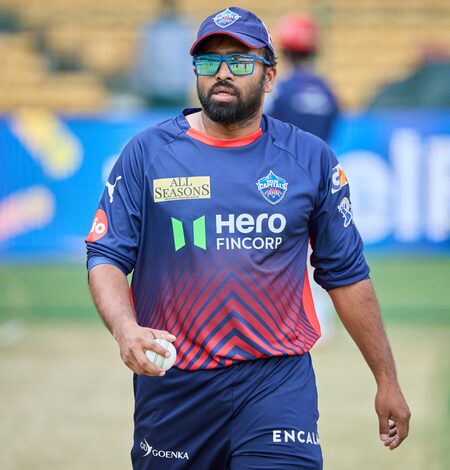
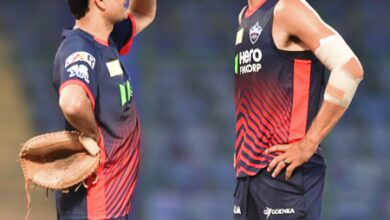
New Delhi, April 30 (IANS) Before the Delhi Capitals begin their practice sessions in IPL 2026, three men are already at the stadium and quietly set up the practice nets. In their kit bags, they carry no bats, caps, gloves or pads. What they carry instead are a variety of balls and sidearm throwers with which they make the batters practice relentlessly ahead of every match day.
Aniket Berde, Darshan Singh, and Sai Pendum arm themselves with their sidearm throwers and hurl a cricket ball at velocities that would make most first-class bowlers blink.
Aniket tops out around 150 kph, while Pendum has clocked 155 kph. They can swing the new ball, reverse the old one, replicate a left-armer’s angle, as well as bowl the skiddy deliveries or the toe-crushing yorker in Lasith Malinga or Matheesha Pathirana style from 18 yards.
They do it ball after ball until a batter in the middle says enough. They enter before anyone else, leave after their work is done, and spend the hours in between quietly keeping the players’ world in motion. The throwdown specialist was barely a whisper in Indian cricket until Raghavendra Dvgi, widely known as Raghu, made the craft visible.
Now the Indian team’s most celebrated throwdown specialist, Raghu’s sharp deliveries earned acknowledgement from every Indian batter, from Virat Kohli to Suryakumar Yadav. Apart from Raghu, Dayananda Garani and Nuwan Seneviratne have been salient fixtures in India’s support set-up.
Word travels fast in Indian cricket’s ecosystem – in 2013, Aniket was an assistant coach working under Pravin Amre, the former India Test batter who also served as DC’s batting coach, when he first encountered the possibilities of being a throwdown specialist. A cricketer from Kalyan, Aniket took to coaching early, and the scale of what he saw Raghu doing altered the course of his career.
“I was with Ajinkya sir in a practice session, when I saw Raghu give him throwdowns. After that, I asked him how he did it. He told me that you can do it like this or that. In 2013, there was no trend of throwing with a sidearm. Since 2015/16, the trend has increased. I started learning it and then slowly, I started throwing with a sidearm,” recalls Aniket in an exclusive conversation with IANS.
Within years, Aniket, who previously bowled to the likes of Shreyas Iyer and Robin Uthappa, had not only mastered the sidearm with his right hand, but drawn on his background as an ambidextrous cricketer: bowling and batting right-arm while throwing with his left.
After three years with Dubai Capitals in the ILT20, he is now proficient in sending throwdowns with both hands for DC in the IPL, an ability that, in the hyper-specialised ecosystem of T20 franchise cricket, is a genuinely valuable asset.
“Because I used to throw balls with my left hand, it was also strong. Gradually, I started throwing with my left hand. As I practiced, I was able to send down balls with my left hand. Initially, I used to throw along the line and length. Now, I am able to throw in a normal way,” he said.
Having someone like Darshan, the senior-most throwdown specialist in DC, has made for a huge learning experience for Aniket. “Darshan bhai is like a senior to me, as he has been in DC for 7-8 years. We try to learn as much as we can from him. The camaraderie is good. Darshan bowls to the main batters in the centre, while me and Sai handle the nets besides him.”
Darshan’s journey to being a throwdown specialist began after injury cut short his playing life. He grew up in Ramban district in Jammu and Kashmir, nursing ambitions of playing for India. He played age-group cricket for the state as a pacer until a stress fracture in 2014 took a year or two out of his playing life. The door on playing was effectively closed, but Darshan found another one opening.
In 2013, watching a throwdown specialist at work during a Ranji Trophy practice session, something clicked. His first significant break came when he delivered throwdowns to then-India opener and current head coach Gautam Gambhir at the Roshanara Club in New Delhi in 2016.
He spent four years with DDCA, had a two-year stint with the J&K team, and in 2018 earned his place in the IPL with DC – a relationship that has endured ever since, including stints with the Dubai Capitals in the ILT20. What strikes Darshan, even now, is how intimate the craft really is.
Throwdowns are not generic batting practice – they are bespoke simulations, tailored to each batter’s position in the order and the specific problems they are solving. “Nissanka and Rahul are openers. So they have a different way of preparation – they would prefer facing good length balls, a little bit of swing with the new ball.
“They tell us that we have to do this and we deliver balls as per their requirement. Now, Tristan Stubbs is a middle order batter and what we have to do for him is, we have to bowl with the old ball and then deliver yorkers, as they are bowled the most in death overs,” he said.
The sidearm can replicate a bowler’s height and angles – coming from wide of the crease or over the wicket and even generate the scrambled seam reverse swing balls. Darshan, Aniket and Sai switch between these variables with the unhurried expertise of skilled craftsmen who have spent years learning their trade.
“Yes, we do switch between bowling with an old ball and a new ball. For the red ball games, we send it down with the old ball. We have to get the old ball to reverse. When we are with a Ranji Trophy team, we bowl reverse swing and make them play on the good length balls more,” said Darshan.
Though at peace with where he is, Darshan dreams quietly of the next step. “I do now think that when will our time to be in the Indian team as a side-armer will come through. If something materialises over there in future, then talks can happen for the same.”
Sai, meanwhile, carries perhaps the most improbable story of being a throwdowns specialist. He grew up in Mahabubnagar district in Telangana, where his father cut trees in forests and his mother worked in others’ agricultural fields.
He played district-level cricket as an off-spinner, but seeing the politics in Hyderabad cricket convinced him early that the conventional route was closed. He worked odd jobs as a painter and construction foreman until his first encounter with a sidearm came in 2018, through a friend named Ganesh.
With zero knowledge of how the tool worked, Ganesh offered Sai a simple piece of advice: go to Hyderabad and bowl with a bigger roboarm, and you will get paid. The connection that changed his trajectory came in 2021 through a message on Instagram to coach Adnan Bafana, who runs his academy in Hyderabad.
“He had a camp in Hyderabad, and I asked him to inform me if there were any vacancies or requirements, and I even told him that I didn’t need a salary. His instant response was, ‘Come and join me.’ At that time, I didn’t even know how to bowl with a side arm.
“When I went to him, he observed me for a week and told me one thing: ‘You have a lot of talent, and you will reach great heights.’ He asked me to continue my good work. It is because of that trust and assurance that I am here right now,” recalled Sai.
The early months were physically brutal. “After a month, I started feeling pain in my shoulders. At one time, I thought that I will quit side-arm. He told me that if I start like this, I will get used to it and there will be no problem. After that, I made the players practice. I didn’t want money, as I just wanted a chance. I waited for that chance and kept doing this.”
From Hyderabad, Sai’s path took him to the Legends League Cricket with India Capitals – where he was spotted by DC strategist Ruchir Grandhi, head coach Hemang Badani, director of cricket Venugopal Rao, and former India wicketkeeper-batter Wriddhiman Saha. He then travelled with Dubai Capitals before getting attached with DC in the IPL.
“It is completely player-specific. Whatever shots they want to practice, they tell us, and we facilitate according to their needs – whether it’s pace, inswing, cutters, or outswing -everything is done as per the player’s requirement,” he said.
His bowling shoulder, currently carrying a mild tear, is being managed through injections and a targeted strengthening programme. “I feel very happy when players perform well, and it gives me great satisfaction knowing that I helped them practice with specific speeds and variations.”
Since taking up throwdown work, all three have found that the game has begun to reciprocate in varying degrees. Aniket is philosophical about the demands of being a throwdowns specialist in his personal life.
“My family does get a bit angry because I am married and have a six year old daughter. But they like that I am growing in it as a career. So they keep adjusting for us. They do know that I am doing something good. They feel if you are liking something, you can do it, and I have full support from my family.”
Darshan speaks about the financial side, where pay scales vary by experience and geography – state associations offer contracts ranging from monthly salaries to tournament-specific deals, while franchise T20 cricket contracts differ widely across leagues and seasons.
“Our finances are good. We don’t lack anything. Everyone has a dream to play for India. If it’s not written in someone’s destiny, then we have to do something to be around that sport.”
For Sai, the emotional arithmetic is different – shaped entirely by where he comes from. “I have been very passionate about cricket since childhood and always wanted to play. But my mom and dad used to scold me and never really supported me. Still, I was motivated to do something special.
“Even though I didn’t play much, I had a dream to work with well-known cricketers. Now when I am doing what I wanted to do, they still don’t understand cricket. I do tell them that I am at this stage, and they are happy for me.”
In cricket’s rewarding yet unforgiving ecosystem, there are no weekends off, holidays break or even the option to skip an optional practice session for the throwdown specialists. The names of Aniket, Darshan and Sai don’t appear in the team’s promotional reels or match-day graphics, while the broadcast cameras never catch them.
When DC’s batters stride out, honed by 155 kmph throwdowns, the grind of three unsung men finds its echo in every run scored. They are the first to slip in, leave after everyone is done for the day, and remain the invisible hands shaping the side’s batting fortunes.
–IANS
nr/