
India’s UPI sets global benchmark supporting 20 billion transactions monthly: Report

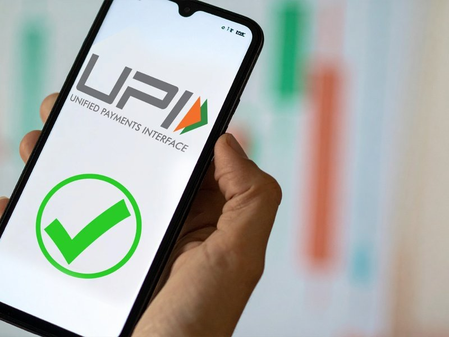
New Delhi, Sep 24 (IANS) India’s Unified Payments Interface currently processes over 20 billion transactions a month setting the global benchmark for real-time payments, a report said on Thursday, adding that the platform demonstrates how digital public infrastructure can combine scale and financial inclusion.
The report from Boston Consulting Group (BCG) said global payments revenue is projected to touch $2.6 trillion by 2030, with annual growth slowing to 5 per cent compared with 7 per cent over the past five years.
The growth will diverge by region with the Middle East and Africa expected to expand faster at 8 per cent than North America at 7 per cent through 2030. The growth will likely be 5 per cent in North America and Europe.
“India’s real-time payments scale is a remarkable achievement in digital public infrastructure. The model is instructive globally as it combines inclusion and scale rather than trading one off for the other,” said Vivek Mandhata, Managing Director and Partner, BCG.
“India drew hundreds of millions of users into digital payments while still growing transaction volumes at a pace few markets can match. Credit cards continue to grow in tandem, particularly online, giving banks, fintechs, and payment companies a genuine opportunity to build richer, value-added offerings on top of an already massive digital rail,” Vivek added.
India’s next phase of growth involves transition into the world of agents while maintaining experience, trust and economic viability for the end consumer and merchants, he said.
“AI is reshaping payments and transaction banking, helping leading companies lower costs, improve products and automate historically paper-heavy processes such as trade finance and payment operations,” the report noted.
Nearly 73 per cent of large merchants surveyed would consider switching acquirers for better support in preparing for agent-initiated transactions, signalling that readiness for agentic commerce is becoming an important competitive consideration.
Payment sovereignty is reshaping global payment infrastructure, with 137 countries now having 24/7 instant payment systems, increasing the fragmentation of the global payments landscape.
—IANS
aar/pk