
India’s solar manufacturing a huge success story, can withstand US trade measures: Report

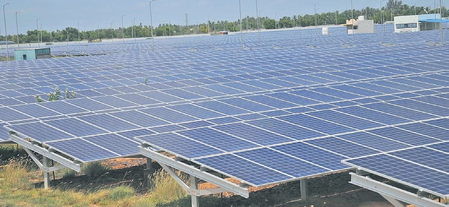
New Delhi, Sep 29 (IANS) India’s solar manufacturing boom has accelerated sharply with $16 billion invested in 18 months and the domestic market can absorb additional supply as it faces fresh export headwinds from US trade measures, a new report has said.
Investment in Indian solar manufacturing surged from about $85 million in 2018 to $12 billion in calendar 2025, with a further $4 billion committed in the first half of 2026, according to the ‘Clean Investment Monitor’ report of the Rhodium Group, a US-based market research and analytics firm specialising in renewable energy.
The module manufacturing capacity has expanded rapidly from about 2.5 GW in 2014 to 242.7 GW. Back in 2014, India had no cells, and it currently holds 40.5 GW of cell and 2.5 GW of wafer capacity, the report said, noting a mismatch between module and cell capacity.
The report added that the gap should narrow as an additional 40 GW of cell capacity and 24 GW of wafer capacity are likely to come up.
The report attributed the growth to the government’s mandate to use locally made modules (ALMM-I) and cells through an approved list of models and manufacturers (ALMM), with efforts underway to extend the ALMM to wafers.
The policy was expanded to cover nearly all solar projects in India, except limited exemptions, notably certain net-metering and open-access projects that have been given a commissioning window till December 31.
The US, an important export market for some Indian solar manufacturers, could impose anti-dumping and countervailing duties causing a major headwind. The US International Trade Commission is yet to determine whether the imports have caused material injury to local industry, thereby inviting the duties.
India’s export of modules and cells to the US was worth about $1.2 billion in 2025, or anounted to 13 per cent of the value of modules and cells produced. The report said the India’s large and growing market can absorb the additional supply, even though margins may get squeezed.
—IANS
aar/ag