‘India’s electoral system offers valuable lessons for democracies worldwide’

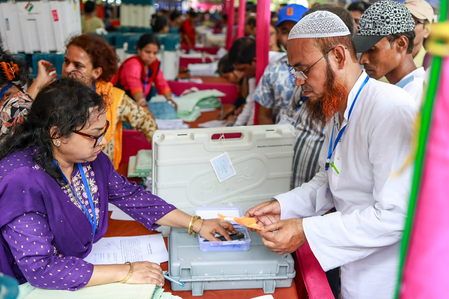
Abu Dhabi, Oct 10 (IANS) India’s electoral achievement goes beyond conducting elections every five years, encompassing the management of an extensive democratic infrastructure, accommodating immense diversity, training election personnel, deploying technology and adapting to changing demographics, a report has stated.
For emerging democracies, India offers an example of how population size, geographical challenges and economic disparities need not stand in the way of regular, competitive elections. And for established democracies, its experience offers valuable lessons in logistical coordination, voter outreach and institutional adaptability, according to a report in UAE’s ‘Gulf Today’ newspaper.
“India’s democracy is not merely an exercise in numbers. It is one of the modern world’s most extraordinary administrative achievements. In a country of more than 1.4 billion people, with vast linguistic, geographical, cultural and economic diversity, conducting regular, competitive elections on such a scale is remarkable. From Himalayan villages and remote islands to deserts and densely populated cities, India has built an electoral infrastructure few countries can match. Its experience offers valuable lessons to democracies seeking to strengthen voter participation, electoral administration and public confidence,” it detailed.
According to the report, India is sharing its electoral expertise with other countries to help strengthen their election management systems. Since the establishment of the India International Institute of Democracy and Election Management in 2011, nearly 3,000 election officials from 141 countries have received training, according to figures published by the Election Commission.
“Programmes cover electoral planning, voter education, institutional capacity building and election administration. India has cooperation agreements with electoral bodies in 28 countries and three international organisations. Electoral institutions across Asia, Africa, Europe, Latin America and the Pacific have participated in these initiatives. India has also provided customised electronic voting machines to countries including Bhutan, Nepal and Namibia, as well as indelible ink supplies to several nations,” the report mentioned.
“During the 2024 General Election, India welcomed international electoral representatives to observe its procedures. The 2026 Delhi Declaration on democracy and election management further demonstrated the value of international cooperation on transparent, inclusive and technologically capable electoral systems,” it added.
Maintaining accurate voter lists is essential to the credibility of any electoral system. Deaths, relocations, changes of address and duplicate entries can leave electoral databases outdated. Regular verification is therefore necessary to keep voter rolls updated, prevent administrative complications and preserve public confidence in the electoral process, Gulf Today mentioned.
“India faces this challenge on an unprecedented scale. With hundreds of millions of registered voters across thousands of constituencies, maintaining electoral accuracy requires continuous attention. Millions of deaths annually and extensive internal migration can affect voter entries. A person moving from Bihar to Delhi, for example, may need to be removed from the earlier constituency’s register and enrolled at the new address,” the report stated.
“That is not disenfranchisement. It is essential electoral administration, provided eligible citizens retain a fair opportunity to register and vote,” it added.
Stressing that Special Intensive Revision (SIR) is not inherently “unconstitutional”, the report argued that its legitimacy rests on lawful execution, procedural fairness and adequate safeguards.
–IANS
scor/as