
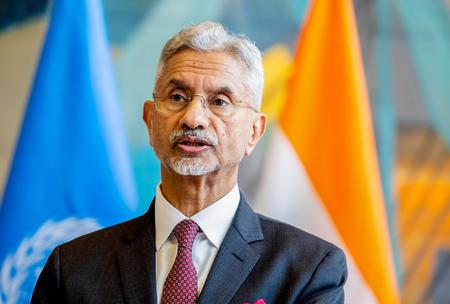
New York, Sep 29 (IANS) India and the United States have reached a broad understanding on a trade agreement, but changes in American tariff policy have complicated the decision on when to conclude it, External Affairs Minister S. Jaishankar said here in New York.
EAM Jaishankar described the proposed agreement as “very, very far advanced”. He said its completion could help put the wider relationship on a better course after a difficult period.
“We have reached a situation where there is more or less an understanding on the trade agreement,” he said during a question-and-answer session. The question now, he said, was “what has changed on the American side”.
He pointed to the shift in the basis for US tariffs and to a Section 301 process that was still unfolding. India had to judge when to close an agreement negotiated over a long period while that process continued, he said.
EAM Jaishankar said expectations of a quick deal had run up against the complexity of India’s economy. India has many small farmers and manufacturers, he said, and its production structure differs sharply from that of the United States.
“A trade negotiation required a certain amount of, I think, of patience and detailing, to see it through,” he said. The time needed to reach an understanding had created “bumps” in the relationship last year, he added.
The minister identified two other issues that affect how India views its ties with Washington: terrorism and the movement of people.
Terrorism was a matter of particular importance to India, EAM Jaishankar said. He argued that India had faced attacks from a neighbouring country over many years and that a lack of understanding from a partner on such a central concern would affect the relationship.
“If one of my primary concerns is not fully appreciated by my partner, then clearly there is an impact of that on the relationship,” he said.
On mobility, EAM Jaishankar said its economic benefits were now colliding with political concerns in parts of the United States. He said the issue also shaped public perceptions of the relationship. In democratic societies, diplomacy could no longer be conducted solely between governments, leaders and diplomats, he said, because public opinion had a greater role.
“We would certainly hope for and expect the relationship to move on an upward trajectory,” EAM Jaishankar said, while adding that the two countries had to deal with the issues before them.
His comments came during a wider discussion of changes in the international order. Jaishankar said countries were seeking more partners and options as competition increased, even though their economies remained deeply connected. He also said American trade policy now affected partners that had played no part in the practices Washington was seeking to address.
India and the United States have expanded cooperation across trade, technology, defence and education over the past two decades. Their relationship has also had to accommodate differences over market access and other policy questions.
The two countries are members of the Quad alongside Australia and Japan. India has long sought to maintain room for independent decisions in its foreign policy while building closer ties with the United States.
–IANS
lkj/rs