India matters to world; we must be more careful, measured in our responses: Syed Akbaruddin

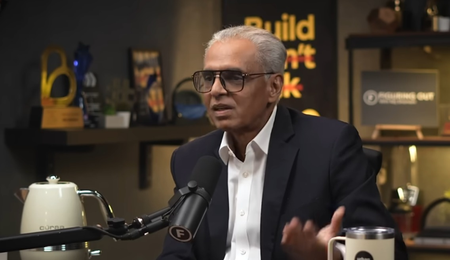
New Delhi, April 3 (IANS) India’s former Permanent Representative to the United Nations, Syed Akbaruddin, said that the country’s foreign policy is increasingly reflecting the aspirations of its young population and the everyday concerns of ordinary citizens, and while India matters to the world, the reverse is also true and and therefore, it must adopt a more careful and measured approach in its responses.
Speaking on the YouTube channel of young Indian podcaster and entrepreneur Raj Shamani, Akbaruddin dwelt on the evolving nature of diplomacy, as he highlighted that the expectations of young Indians today are very different from those of earlier generations.
The former IFS official noted that while traditional foreign policy focused largely on ideological positioning, today’s youth are more concerned with practical outcomes such as employment opportunities, easier visa access, and better avenues for remittances.
“So I see that the young and the ordinary Indian want something else from foreign policy than the traditionalist wants. They want jobs, opportunities, better visas, and remittances,” he said, underlining how these aspirations are now being reflected in India’s external engagements.
Akbaruddin added that India’s approach in the 1980s was far more vocal and reactive on global issues.
“We were more outspoken and quick to comment on international developments. If something happened in Libya or Venezuela, we would be among the first to condemn it,” he said.
However, he pointed out that the country’s growing economic integration with the world has necessitated a more cautious and balanced stance. While India’s global economic engagement stood at around 15-17 per cent in the 1980s, it has now risen to nearly 50 per cent. This shift, he said, has made it essential for India to act with greater restraint and strategic calculation, as global developments now have a direct impact on domestic interests.
“Today, while India matters to the world, the world also matters equally to India. Therefore, we must be more careful and measured in our responses,” he added.
Discussing geopolitical realities, Akbaruddin said that every country operates with a certain degree of leverage in international relations. He cited China’s strong influence over Iran due to its significant oil imports, contrasting it with the relatively limited leverage of European nations in similar contexts.
He emphasised that foreign policy outcomes should not be judged solely on immediate results, as diplomacy is often a gradual and process-driven effort.
“Some processes take time, while others may move faster. Different countries have different levels of leverage,” he said.
Highlighting India’s strengths, he added that the country enjoys considerable influence in the Gulf region, which has helped it secure its interests effectively. He stressed that India’s foreign policy should be evaluated based on its leverage and outcomes rather than on whether it publicly criticises global developments.
–IANS
jk/vd