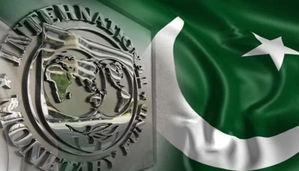
New Delhi, March 24 (IANS) The decision to enter another IMF funding arrangement has been a subject of continuous debate in Pakistan, as the country has already gone to the multilateral lending institution as many as 24 times for bailout packages to restore its macroeconomic vulnerabilities.
Pakistan’s economy has been growing in a “stop-start” pattern as it improves for a while, with these IMF programmes bringing some stabilisation in the short-term, but then worsens again as there is no sustainable growth that takes place, according to an article in the Karachi-based Business Recorder.
Despite the IMF funding, Pakistan’s gross financing needs continue to be exceptionally high, and high interest payments, which constitute a major portion of the total federal budget, severely limit fiscal space, dispense with social and development spending, and increase vulnerability to macroeconomic shocks. This shows headline indicators improve during stabilisation, but resilience does not, the article pointed out.
Many vulnerabilities in Pakistan’s economy remain elevated. Gains in key sectors, particularly agriculture, have been reversed by floods. The IMF forecast that due to the negative effects of the flood, the current account is expected to have a small deficit. Remittances inflows remain high in the country, providing a significant external buffer, yet imports surge due to tariff rationalisation, and climatic shocks pose severe risks, the article stated.
Besides economic fragility, climatic risks also remain elevated. The recent flood has caused more agricultural damage than expected, and if it spills over into the industrial and services sectors, it could push inflation higher, reduce government revenue, and add pressure to government spending. Furthermore, rising social unrest, geopolitical tensions, and global inflation may exacerbate vulnerabilities and increase the likelihood of another cycle of crisis, the article observed.
IMF stabilisation programmes have focused on addressing demand-side imbalances but have not adequately addressed supply-side limitations. The article highlights that stabilisation efforts leave the economy vulnerable to future crises unless reforms are implemented to address the fundamental constraints.
Pakistan’s export base is still small because production is not growing. Despite rupee devaluations, exports have stayed at about 9 per cent to 10 per cent of GDP, which is much lower than peers like Bangladesh and Vietnam. This demonstrates that the core barriers to growth are low productivity, a lack of human capital, and structural inefficiencies. There is an urgent need of targeted policies that will boost production in export-oriented manufacturing and services, while addressing structural constraints, enhancing human capital, and expanding the export base.
Human capital deficit is also a critical issue in Pakistan despite macroeconomic stabilisation. Pakistan even lags behind peer economies such as Vietnam and Bangladesh in terms of health, education outcomes, and female labour force participation. Evidence from HIES 2024-25 and LFS 2024-25 demonstrates that households prioritise cutting back on healthcare and education during fiscal tightening, which directly undermines long-term productivity, the article lamented.
–IANS
sps/vd