
From 121 in 2009 to 429 in 2026, Nepal witnesses significant increase in tiger population

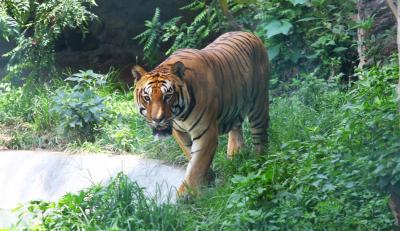
Kathmandu, July 29 (IANS) Nepal’s tiger population has increased to 429 in 2026 from 355 recorded in 2022, as the country continues to make significant strides in conserving the endangered big cats.
Nepal’s Ministry of Agriculture, Forests and Environment unveiled the latest National Tiger Census on Wednesday to mark the World Tiger Day.
Nepal conducts a nationwide tiger census approximately every four years.
The latest figure represents another milestone in Nepal’s conservation success story, with the country’s wild tiger population rising from just 121 in 2009 to 429 in 2026.
The increase in tiger numbers has coincided with a steady expansion of Nepal’s forest cover. According to a comprehensive World Bank report, Nepal increased its forest cover from 29 per cent in 1994 to more than 46 per cent in 2022.
Since the Tiger Summit held in Russia’s Saint Petersburg in 2010 endorsed the St. Petersburg Declaration on Tiger Conservation, setting the ambitious goal of doubling the global wild tiger population by 2022, tiger numbers have rebounded significantly worldwide.
“This is a major achievement for Nepal,” Hari Bhadra Acharya, senior ecologist at the Department of National Parks and Wildlife Conservation, told IANS. “Not only has the country succeeded in conserving an endangered species, but it has also managed to steadily increase its tiger population.”
He said the latest results further reinforce Nepal’s position as a global leader in tiger conservation.
According to the World Wildlife Fund (WWF), the global wild tiger population had fallen to about 3,200 in 2010, representing a 97 per cent decline from historical levels. The number has now recovered to 5,574, with India hosting the world’s largest tiger population at 3,682.
According to Nepal’s latest census, the Chitwan–Parsa landscape has the highest tiger population, with 145 tigers in the Chitwan area Bardiya National Park and its surrounding forests are home to 112 tigers. There are 71 big cats in the Parsa National Park and its surroundings. Banke National Park and adjoining forests have 51, while Shuklaphanta National Park and its surrounding forests house 50 tigers.
Nepal’s latest tiger census was conducted primarily using the camera trap method, with automatic cameras installed throughout tiger habitats to capture photographs of the animals, according to the Department, which falls under the Ministry of Agriculture, Forests and Environment.
Individual tigers were identified by their unique stripe patterns, which are as distinctive as fingerprints. The collected data were then analysed using statistical and analytical models to estimate the final tiger population.
Around 1,100 automatic camera traps were deployed and systematically rotated across 1,900 survey points in different survey blocks and phases. The census was carried out by a multidisciplinary team of 250 to 300 technical experts and field personnel.
Acharya said the growing tiger population has also created two major conservation challenges: sustaining the expanding population through long-term habitat management and reducing human-tiger conflict.
“Nepal must ensure the long-term protection and effective management of tiger habitats to maintain the current population,” he said. “As tiger numbers increase, encounters and conflicts between people and tigers are also becoming more frequent. Reducing and effectively managing human-tiger conflict will be one of Nepal’s biggest conservation challenges in the years ahead.”
To address one of those challenges, Nepal has already begun planning its first Tiger Sanctuary in Chitwan National Park in the southern district of Chitwan. The facility is intended to provide a more natural environment for rescued and problematic tigers while also promoting eco-tourism.
“Problematic tigers” are those that pose a direct threat to human safety — often older or injured animals that are no longer able to hunt natural prey. Acharya told IANS that the proposed sanctuary at Devnagar in Chitwan would be developed on approximately 52 hectares of land and is designed to accommodate 18 to 20 tigers, providing long-term care for rescued animals while serving as a major eco-tourism destination.
–IANS
scor/as