

New Delhi, June 22 (IANS) China’s increasing investments in Spain’s port infrastructure has triggered serious concerns in the European Union as well as among security analysts, who warn that such projects near sensitive military facilities could eventually carry strategic, intelligence or security implications, according to a report in Directus, a Greek news portal.
The debate has intensified as Beijing steps up investments in Spanish logistics hubs and industrial projects such as a planned factory by Chinese auto giant SAIC near the Ferrol naval base at Galicia located in northwestern Spain, the report states.
“The project has attracted particular attention because of its location. The Port of Ferrol is home to one of the Spanish Navy’s most important headquarters as well as Navantia, Spain’s leading state-owned shipbuilding company. The area is also considered strategically significant for NATO operations in the Atlantic region,” the report observes.
According to plans, one of the two SAIC industrial complexes will be constructed near the access point used by Spanish military vessels, including the Navy’s fleet of F-100 frigates.
The report cites the Galician regional president Alfonso Rueda confirming the investment in early June, following a trip to China aimed at securing the agreement. He publicly thanked Spanish Prime Minister Pedro Sanchez for supporting the initiative, highlighting the strong diplomatic relationship between Madrid and Beijing.
The article highlights that although several alternative locations were reportedly proposed, SAIC chose the area around the naval port of Ferrol for its first industrial facility in Europe. The company is expected to invest approximately 200 million euros in the project.
For local authorities, the investment represents an opportunity to stimulate economic growth, create jobs, and strengthen industrial activity in the region. However, security experts argue that the strategic nature of the location sets this case apart from ordinary foreign investments, the report points out.
The report cites Alberto Camarero Orive, a specialist in port security and logistics at Madrid’s Polytechnic University, as saying that Ferrol remains one of Spain’s most sensitive strategic zones due to its naval infrastructure, military operations, and links to NATO. He warns that in times of international crises, geopolitical tensions, or hybrid warfare, port terminals can become potential points of vulnerability.
Spanish media reports indicate that SAIC is already preparing to send a logistics vessel to evaluate and test the port’s infrastructure as early as July.
According to Camarero, foreign investments — particularly those involving state-backed Chinese companies — require additional safeguards to prevent foreign actors from obtaining effective control over critical infrastructure. These concerns are reinforced by China’s already significant presence in Spain’s port sector, the report added.
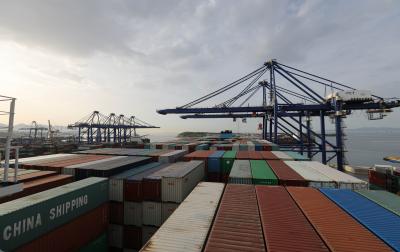
The report also underscores that Chinese shipping giant COSCO established a major foothold in Spain in 2017 when it acquired a 51 per cent stake in container terminal operator Noatum has recently expanded its presence to Tarragona, south of Barcelona.
The report further states that amid these rising concerns, the European Commission is developing new guidelines under its EU Ports Strategy to help member states assess the influence of third countries on port operations across the bloc. Last week, the EU’s transport ministers welcomed the initiative and emphasised the need to prevent excessive foreign ownership or control of critical port infrastructure and operations, the report added.
–IANS
sps/na