
Delhi-NCR experiences morning, evening chill; air quality remains poor, GRAP-I measures enforced

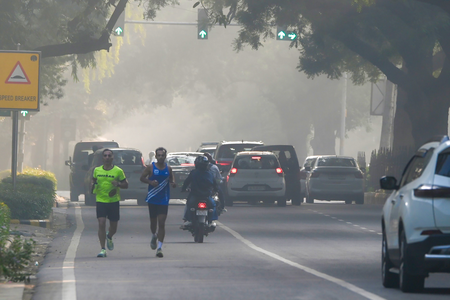
New Delhi, Oct 22 (IANS) Delhi-NCR witnessed a slight chill during the morning and evening hours on Thursday, while air pollution continued to remain a concern, with several monitoring stations recording poor air quality and some areas reporting very poor conditions.
According to air quality monitoring data, Chandni Chowk recorded an Air Quality Index (AQI) of 306, falling in the very poor category. Other locations reporting poor air quality included Mandir Marg and Punjabi Bagh, both at 279, Sirifort at 277, Dwarka Sector 8 at 275, Alipur at 272, NSUT Jaffarpur at 263, NIH Narela at 259, Pusa at 256, Burari Crossing at 226, IGI Airport Terminal 3 at 213 and Vasundhara Enclave at 206.
Among the other monitoring stations, Anand Vihar recorded an AQI of 236, North Campus of Delhi University 240, Karala 188, Uttam Nagar 170, Chhawla 146, Badarpur 141, Maidan Garhi 132 and IMD Lodhi Road 147. Burari recorded an AQI of 190.
According to the Central Pollution Control Board (CPCB), an AQI between zero and 50 is classified as good, 51-100 as satisfactory, 101-200 as moderate, 201-300 as poor, 301-400 as very poor and 401-500 as severe.
The Commission for Air Quality Management (CAQM) on Wednesday invoked Stage I of the Graded Response Action Plan (GRAP) across Delhi-NCR after the national capital’s air quality deteriorated to the poor category.
Delhi’s AQI climbed to 244 at 2 p.m. on October 21, compared with 179 a day earlier, when the air quality was in the moderate category. Forecasts by the India Meteorological Department (IMD) and the Indian Institute of Tropical Meteorology (IITM) suggest that pollution levels are likely to remain elevated over the next few days.
Stage I of GRAP includes restrictions on the use of coal and firewood in tandoors at hotels, restaurants and open eateries, along with curbs on the use of diesel generator sets. The measures are intended to prevent further deterioration in air quality.
The CAQM’s GRAP sub-committee has directed authorities across the National Capital Region to implement the prescribed measures immediately and maintain close surveillance. Residents have also been advised to follow the citizen charter issued under Stage I.
The restrictions cover Delhi and adjoining areas of Haryana, Uttar Pradesh and Rajasthan. Authorities will continue monitoring pollution levels and weather forecasts before deciding whether additional measures are necessary.
The latest curbs come ahead of the Delhi government’s Winter Action Plan, scheduled to take effect from November 1. The plan focuses on controlling vehicular emissions, construction dust, industrial pollution and other sources that contribute to seasonal deterioration in air quality.
Among the proposed measures is the ‘No PUC, No Fuel’ policy, under which vehicles without valid Pollution Under Control certificates will not be supplied fuel. From November 1, non-Delhi-registered vehicles that do not comply with BS-VI emission standards will also face entry restrictions, subject to applicable exemptions.
The government has additionally announced plans for 50 per cent work from home, restrictions on construction activities, stricter dust-control monitoring and more mechanised road sweeping.
Meanwhile, the Delhi Metro Rail Corporation (DMRC) will operate 20 additional train trips on weekdays from October 22 to encourage commuters to use public transport following the implementation of GRAP Stage I.
The DMRC will also intensify dust-control efforts at construction sites and on adjoining roads. The measures include removing accumulated dust, clearing garbage from footpaths and cleaning road medians to help reduce pollution across the capital.
–IANS
jk/dpb