
Claims that E20 petrol doesn’t work for older vehicles, auto manufacturers oppose it false: Govt

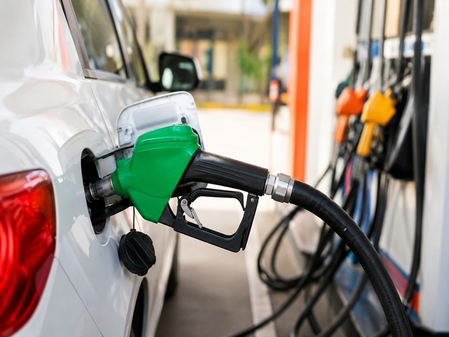
New Delhi, July 30 (IANS) The Ministry of Petroleum and Natural Gas on Thursday refuted claims in the media and social media that vehicles manufactured before 2023 cannot run on E20 petrol, and that auto manufacturers have privately indicated that the blended fuel is not desirable.
A factsheet, released by the ministry, stated that E15-plus fuel has been in widespread use for over three and a half years, while E19-E20 fuel has been in use for over two and a half years. During this period, no verified news of widespread engine failure or vehicle breakdown attributable to ethanol blending has emerged. Had ethanol blending been causing systemic damage to engines or fuel systems, such failures would have resulted in large-scale warranty claims, service campaigns and widespread consumer complaints, none of which have been reported, it said.
The government’s assessment is also based on manufacturer service data. A leading OEM serviced 2.84 crore vehicles during FY 2025-26, including approximately 1.5 crore vehicles that were not originally certified as E20-compatible, and reported no E20-linked corrosion, abnormal wear or reduction in component life. A leading 2-wheeler company has reported similar field experience, as per the factsheet.
Dismissing the claim that nearly 30 crore vehicles will become unusable, the factsheet states that E15+ blended petrol has already been in widespread use for more than three and a half years, while E19-E20 fuel has been in use for over two and a half years.
During this period, more than 20 crore two-wheelers and more than 3 crore petrol cars have operated on these fuels without any verified evidence of widespread engine failure or vehicle breakdown attributable to ethanol blending.
If E20 really rendered vehicles unusable, India would have witnessed millions of breakdowns, warranty claims and service campaigns, the factsheet said. Nothing of that sort has occurred, it pointed out.
Rejecting the claim that automobile manufacturers have privately indicated that E20 is not desirable as misleading, the factsheet states that on July 4, the Ministry of Petroleum & Natural Gas, along with the Ministry of Heavy Industries and the Ministry of Road Transport & Highways, convened a joint press conference where senior executives from Toyota Kirloskar, Maruti Suzuki, Hero MotoCorp, Hyundai Motor India, TVS Motor Company, and Bajaj Auto collectively addressed concerns regarding E20. Their position was unequivocal:
Toyota Kirloskar stated that E20 was introduced only after rigorous testing on older vehicles, describing ethanol as a clean, high-performance fuel that has been used globally for decades. Maruti Suzuki gave what it described as a “statement of confidence” to consumers. Based on 2.84 crore vehicles serviced in FY 2025-26, including more than 1.5 crore older vehicles that were not originally E20-certified, the company reported no E20-related corrosion, abnormal wear, or reduction in component life.
Hero MotoCorp, one of the world’s largest two-wheeler manufacturers, stated that analysis of its extensive service data found no higher incidence of damage in vehicles operating on E20 compared to earlier fuels, while Hyundai, TVS Motor Company, and Bajaj Auto also participated in the same press conference and collectively reaffirmed the industry’s confidence in the E20 programme. The panel concluded by reiterating its commitment to the programme and to addressing consumer concerns transparently.
Refuting the claim that mileage will collapse, the factsheet states that government studies and automobile manufacturers have consistently explained that fuel efficiency depends on multiple factors, including driving habits, traffic conditions, vehicle maintenance, tyre pressure and air-conditioner usage. For certain older E10-designed vehicles, any reduction in fuel economy is generally limited to about 3-5 per cent, not the exaggerated figures being circulated.
At the same time, E20 provides a higher octane rating, superior anti-knock characteristics, cleaner combustion, smoother engine performance and better acceleration and ride quality, the factsheet added.
The factsheet also highlights that ethanol is not a new fuel. It has been used globally for over a century, with countries such as Brazil operating higher ethanol blends for decades.
–IANS
sps/vd