
New Delhi, Oct 16 (IANS) The Home Ministry on Friday notified the Census (Amendment) Rules, 2026, expanding the eligibility for enumerators to include teachers, government officials, local authority staff, and any other person considered suitable by the administration of the respective state governments or Union Territories.
Under the revised rules, teachers from any government educational institution, local authority, aided or unaided private educational institutions, societies, or trusts can be appointed as enumerators.
Additionally, clerks or any official of the Central or State government, local authority or establishment, including public sector undertakings, statutory bodies, banks, companies, institutions, societies, and trusts may also be included.
Also, any person whom the administration of a State or Union Territory considers suitable may perform the duties of enumerator.
These amendments aim to enhance the representation of enumerators and ensure a broader pool of qualified individuals for Census operations.
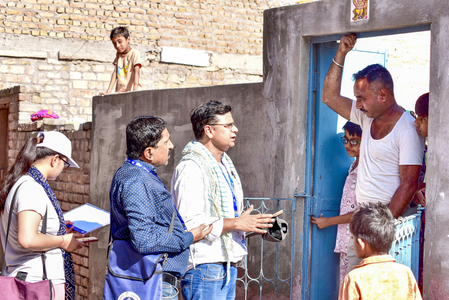
Enumerators play a crucial role in conducting the Census of India, as they are responsible for visiting households, collecting accurate demographic, social, and economic information, and ensuring that every individual is counted.
They serve as the primary link between citizens and the census administration, helping to gather reliable data that supports government planning and policy-making.
`India conducts a population Census once every 10 years under the Census Act, 1948. The last such exercise was conducted in 2011, while the 2021 census was postponed due to the Covid-19 pandemic.
According to authorities, the current Census is the 16th such exercise in the overall series and the eighth after Independence, continuing a tradition of nationwide population enumeration that began in 1872, with the first synchronous census conducted in 1881.
The findings of each Census have been widely used for planning public services, infrastructure development, and welfare programmes.
It revealed that India’s population had grown by more than 181 million during the decade 2001-2011, reaching 1.21 billion, making it the world’s second most populous country. But the increase of some 17.7 per cent in 2001-2011 marked a slower rate than in the previous decade. It also recorded an improvement in literacy, up from 64.8 per cent in 2001 to over 74 per cent in 2011.
Meanwhile, overall sex ratio at the national level increased by seven points to reach 940 in Census 2011 as against 933 in Census 2001.
The last census also highlighted rapid urbanisation, with a growing share of people living in towns and cities, and showed significant variations in population growth, literacy, and social indicators across different states.
–IANS
jb/vd