Bengal govt to publish white papers on irregularities during Trinamool’s rule

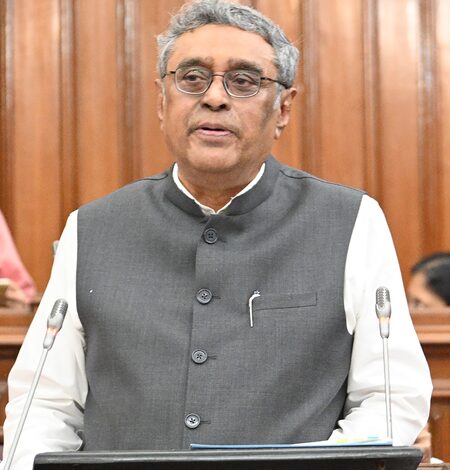
Kolkata, June 25 (IANS) The Bharatiya Janata Party (BJP)-ruled West Bengal government will release white papers on the department-wise financial irregularities during the previous Trinamool Congress-ruled state regime, state finance minister Swapan Dasgupta said on Thursday.
In his concluding speech on the discussion on the state budget for the financial year 2026-27, which was presented by him on the floor of the House on June 22, Dasgupta said that the said white papers will explain why the huge accumulated debt was incurred by the state government during the last 15 years of Trinamool rule from 2011 to 2026 and why there had been unnecessary delay in implementation of several important development projects in the state.
Economic observers feel that the white-paper announcement is in line with the state finance minister’s earlier commitment to improve the state’s own tax revenue generation by plugging the loopholes leading to tax collection leakages and thus eliminating corruption, so that the common people would not be burdened with higher tax slabs for the purpose of improving tax revenue generation.
Speaking on the occasion, the state finance minister also said that henceforth the new state government will place the reports of the Comptroller and Auditor General (CAG) of India on the floor of the West Bengal Assembly, an issue that was totally ignored during the previous Mamata Banerjee-led regime.
He also explained that the aim of publishing the white papers was not just to highlight financial irregularities across departments during the previous regime, but also to assign accountability to the respective departments for plugging such corruption loopholes.
According to him, the white papers are also aiming at bringing transparency to the government and making the common people aware of it.
Speaking on the occasion, he said the proposals to fix budgetary allocations for different state government departments in the last budget were based on the respective departments’ past performance, especially regarding the effective utilisation of funds.
–IANS
src/dan