Banas Bio-CNG plants reduce 6,750 tonnes of CO2 annually, boost farmer incomes in Gujarat

Gandhinagar, March 26 (IANS) Gujarat’s Banas Bio-CNG initiative is emerging as a benchmark in rural economic development, generating significant revenue for farmers while contributing to the state’s climate goals, officials said on Thursday.
Developed by Banas Dairy under the guidance of Chief Minister Bhupendra Patel, the project converts cow dung and other organic waste into clean fuel and organic manure, creating an integrated model of energy production, agricultural support, and environmental conservation.
The state government has allocated Rs 60 crore in the 2026-27 budget to expand the Bio-CNG sector through cooperative milk production societies.
Each plant is estimated to produce annual revenues of around Rs 12 crore from the sale of compressed biogas (CNG) and organic manure.
Daily production per plant includes nearly 1,800 kg of compressed biogas, 25 metric tonnes of solid organic manure, and 75 metric tonnes of liquid manure.
Market rates for these products are Rs 75 per kg for CNG, Rs six per kg for solid manure, and Rs 0.50 per kg for liquid manure, contributing more than Rs three lakh in revenue daily per plant.
“The Banas Bio-CNG model is a proven approach that provides farmers with steady additional income while reducing carbon emissions,” officials said.
The officials added, “Around 400–450 households from 20–25 villages in Banaskantha benefit directly, earning Rs one per kg of cow dung supplied to the plants.”
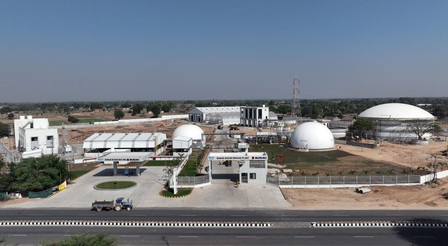
The original plant in Banaskantha, operational for six years, has a daily processing capacity of 40 metric tonnes of cow dung.
Inspired by its success, five additional large-scale plants are planned in the district.
Two of the five plants are currently operational, while a third is in its final stage of construction.
Each facility processes nearly 100 metric tonnes of dung daily using scientific methods.
Around 13 tractor-trolleys are employed to transport the dung, each carrying about four metric tonnes per trip, which also generates local employment and stimulates rural economic activity.
Beyond economic impact, the initiative supports environmental sustainability.
Officials estimate the project will reduce greenhouse gas emissions by nearly 6,750 tonnes of CO2 equivalent annually.
“This initiative exemplifies the combination of clean fuel production, organic manure availability, and scientific waste management, turning Gujarat’s Green Gujarat vision into a practical reality,” the official added.
The project has also attracted national attention, with nearly 15 states exploring replication under the coordinated efforts of the Union Ministries of Jal Shakti and Cooperation.
Analysts say the Banas Bio-CNG model demonstrates how rural energy production and ecological conservation can be successfully integrated, providing a replicable template for sustainable rural development across India.
–IANS
mys/khz