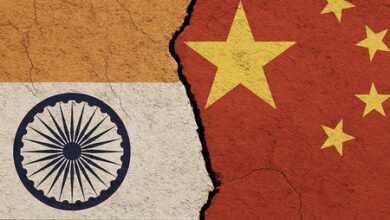
Washington, Feb 18 (IANS) Artificial intelligence could alter the global balance of power before the end of this decade, Anthropic CEO Dario Amodei said, warning that countries that reach advanced AI capabilities first may gain decisive geopolitical leverage — a development with implications for India’s strategic rivalry with China.
“The lack of public recognition of how close we are to the end of the exponential… is absolutely wild,” Amodei said in an interview with podcast host Dwarkesh Patel.
He said he is “90 per cent” confident that within 10 years, AI systems equivalent to what he calls “a country of geniuses in a data center” will exist, and sees a “50-50” chance that such capabilities emerge in one to three years.
“It is hard for me to see that there won’t be trillions of dollars in revenue before 2030,” he added.
Amodei described a scenario in which AI progress continues on a steep but “soft” exponential path, with rapid improvements in coding, reasoning, and scientific tasks. He said end-to-end software engineering automation could arrive within a few years.
But beyond economic gains, he stressed national security consequences.
There could be “certain distinguished points on the exponential” where AI confers “some large advantage from the perspective of national security,” he said.
If one country or coalition reaches such capability first, “people are gonna understand that the world has changed,” he said, suggesting that negotiations over a “post AI world order” may follow.
Amodei voiced concern that advanced AI in authoritarian states could entrench control. “Authoritarianism will have a different meaning” in the age of powerful AI, he said. He has previously argued that such regimes may become harder to displace once backed by advanced AI systems.
He also defended US export controls on advanced AI chips to China, saying that while economic growth from AI may come “very easily,” issues of “distribution of benefits, distribution of wealth, political freedom” will be harder to secure.
The comments come as India accelerates its own AI ambitions amid intensifying US-China tech competition. New Delhi is expanding semiconductor manufacturing incentives, courting global AI firms, and seeking to position itself as a democratic technology partner in the Indo-Pacific.
Amodei suggested that while AI’s economic diffusion will be “extremely fast,” it will not be “infinitely fast.” He predicted rapid adoption but acknowledged real-world bottlenecks in regulatory systems and enterprise deployment.
He warned that a world in which AI systems can design new technologies, conduct scientific discovery, and automate digital work could widen geographic disparities. Growth could accelerate dramatically in regions close to AI hubs while lagging elsewhere.
For India, which maintains strategic autonomy while deepening technology ties with the United States, the question is whether it can secure compute capacity, semiconductor supply chains, and AI research leadership before such “distinguished points” are reached.
Anthropic is one of a handful of frontier AI firms alongside OpenAI and Google DeepMind, pushing large-scale model development. The company has argued that governance frameworks must evolve quickly, as “10 years is an eternity” in AI timelines.
India has yet to formalise comprehensive AI regulation, though it has released advisory frameworks and is investing in national AI infrastructure. With China rapidly advancing domestic AI capabilities and the US tightening chip export controls, the strategic window may narrow faster than policymakers expect.
If Amodei’s timelines prove accurate, the global AI race could crystallise before 2030 — making this decade decisive for technology powers including India.
–IANS
lkj/rs