
Tariff and non-tariff barriers making global trade more complex: CII’s Masood Mallick

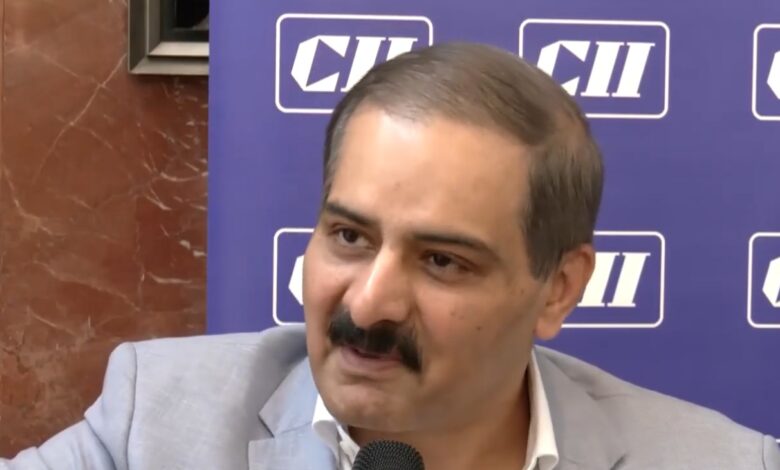
New Delhi, Nov 26 (IANS) Growing tariff and non-tariff barriers across major economies are making global trade increasingly complex, while India must accelerate the transition towards industrial-scale recycling to reduce import dependence and strengthen its circular economy, Chairman of the Confederation of Indian Industry (CII) National Committee on Waste to Worth Technologies, Masood Mallick, said on Thursday.
Speaking to IANS, Mallick said the evolving global tariff landscape extends beyond the recent US tariff proposals and reflects a broader trend that could reshape international trade flows.
“I think the global tariff situation, as well as other non-tariff barriers, will make global trade more complicated,” he said.
Referring to the rapidly changing tariff environment, Mallick noted that trade measures have become increasingly unpredictable.
“The US tariff situation is quite dynamic. It keeps changing much like the stock market. One day it’s up, one day it’s down. But overall, tariff and non-tariff barriers are going to make global trade more complicated,” he added.
On India’s circular economy ambitions, Mallick stressed that the private sector has a crucial role to play in formalising and scaling up the country’s recycling ecosystem.
“The private sector provides the entrepreneurial energy and ecosystem that can shape the formalisation of the recycling sector,” he told IANS.
Much of India’s circularity ecosystem remains fragmented and operates on a small scale, according to him.
He further stated that unlocking the full economic and environmental benefits of circularity in a country as large and diverse as India will require recycling activities to move towards a much larger industrial scale.
Mallick also underlined the importance of behavioural changes at the consumer level, particularly segregation of waste at the point of generation.
“Waste must be segregated at the point of generation. If wet and dry waste are mixed, recyclability is affected and significant resources have to be spent cleaning the waste before it can be processed, making recycling economically unviable,” he said.
He said source-level segregation which is also a key component of the Swachh Bharat Mission, remains essential for improving recycling efficiency and reducing processing costs.
–IANS
ag/