Hockey: Unbeaten India face Malaysia Test in Women’s Asian Champions Trophy semifinal

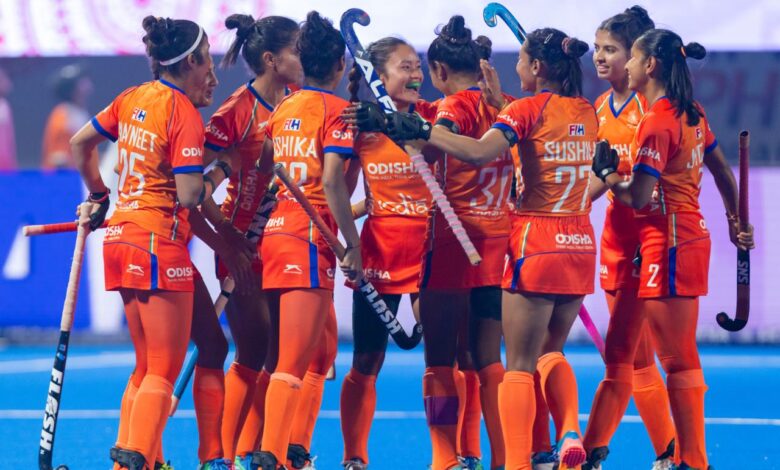
Bhopal, Nov 26 (IANS) After finishing off the round-robin stage with five consecutive victories, the hosts and defending champions, India, now turn their attention to the knockout rounds, where they will face Malaysia in the semi-finals of the Madhya Pradesh Women’s Asian Champions Trophy Bhopal 2026 on Friday at the International Sports Complex in Nathu Barkheda.
India have lifted the Women’s Asian Champions Trophy on three occasions in 2016, 2023 and 2024, and is now pursuing a fourth title that would establish it as the competition’s outright most successful team. India entered the Bhopal edition level with South Korea, each with three championships.
Under chief coach Sjoerd Marijne, India have produced an increasingly assured campaign, finishing atop the standings with 15 points from five matches. The defending champions scored 23 goals and conceded just four, with an impressive goal difference of +19.
India’s campaign so far has illustrated their attacking depth and defensive organisation, which have been the highlights of their campaign in Bhopal, pushing them to the historic high of World No. 4 in the International Hockey Federation (FIH) rankings.
Deepika has emerged as one of the tournament’s most influential attacking players, leading the scoring charts with eight goals, including hat tricks against Thailand and China.
Yet the hosts’ threat extends well beyond their leading scorer, with Lalremsiami, Navneet Kaur, Mumtaz Khan, Neha, Sakshi Rana, and Sunelita Toppo all making valuable contributions.
In the midfield, Navneet has been influential in creating opportunities and winning penalty corners, while captain Salima Tete has contributed through her distribution, movement and leadership.
The contributions of Sakshi, Sunelita and Neha have further demonstrated India’s ability to build attacking movements and generate opportunities from different areas of the pitch. This variety has afforded Marijne incisive forward movements and the calculated exploitation of set-piece opportunities.
India’s penalty-corner routines have also been a significant source of goals, with Deepika leading the conversion charts. Maintaining variety in their set-piece routines will be important if Malaysia defend deep and seek to limit India’s direct routes into the circle.
For Malaysia, restricting India’s circle entries and denying them penalty-corner opportunities will be an important part of the challenge.
Malaysia, meanwhile, will arrive at the semi-final with renewed confidence after securing fourth place with seven points from five matches. Their league campaign included a 2–2 draw against China and a 3–1 victory over South Korea, before they concluded the round-robin stage with an emphatic 4–0 win over Thailand.
The Malaysian side displayed considerable persistence in that final outing, scoring all four goals in the closing six minutes after the contest had remained goalless through the first three quarters.
Nuramirah Zulkifli has scored four goals in the tournament so far and has been among Malaysia’s principal attacking threats, with Nur Azhar, Azmyra Azhairy, Siti Mohd, and Nurmaizatul Syafi also contributing goals. This distribution of responsibility for attacking gives Malaysia more than one source of impetus, and India will need to remain attentive defensively.
The two teams have already crossed paths in Bhopal, with India registering a 4–1 victory in their opening league encounter on 19 November. The match offered an early indication of India’s capacity to recover from an initial setback and to impose their authority as it progressed.
For Marijne’s side, control of the midfield, effective circle entries and clinical finishing will be central to their approach. India’s defensive record offers some encouragement, with just four goals conceded in five matches.
The ability to manage the tempo, retain possession under pressure and make decisive use of attacking opportunities could prove important as the contest develops.
Malaysia’s capacity to produce late goals makes it imperative for the hosts to maintain their structure and intensity.
Japan will face China in the first semi-final on Friday, while India will face Malaysia.
–IANS
bc/vi