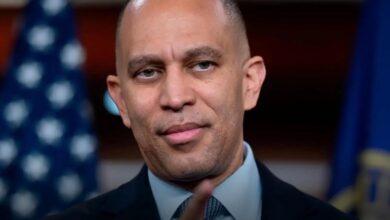
Former NSA Sullivan says Shenzhen summit delivered no practical gains for US

Washington, Nov 23 (IANS) Former US National Security Advisor Jake Sullivan has said that President Donald Trump’s summit with the leaders of China and Russia produced no practical gains for Washington and sent a troubling signal about its relations with its allies.
Speaking on CNN’s Fareed Zakaria GPS on Sunday (local time), Sullivan also warned about China’s expanding nuclear arsenal, while acknowledging that bringing Beijing into discussions on reducing nuclear risks made sense.
“Did the United States get anything out of it? I would say no. Were there any practical results? No,” said Sullivan, who served as President Joe Biden’s National Security Advisor from 2021 to 2025.
The meeting’s broader message was negative, he argued, “because it suggests that right now, the thrust of US foreign policy is to draw closer to the authoritarian leaders of Russia and China than to our democratic allies.”
Trump, Chinese President Xi Jinping and Russian President Vladimir Putin met in Shenzhen on November 19. Their joint declaration pledged dialogue on reducing nuclear risks and preventing nuclear proliferation.
The declaration reaffirmed that “a nuclear war cannot be won and must never be fought.” It did not announce an agreement limiting nuclear arsenals.
Sullivan distinguished what the three leaders gained personally or politically from what he believed the United States gained.
Xi benefited from hosting the meeting and occupying the central position, he said. Putin used it to signal that major powers could decide the fate of smaller countries, undermining Ukrainian confidence.
Trump, Sullivan said, “Got the vanity project of being able to sit at a table with the men he considers to be his only equals in the world.”
On nuclear weapons, Sullivan recalled proposing discussions with a senior Chinese foreign-affairs official in 2022 to reduce the possibility of an unintended escalation.
The United States and China lacked experience dealing with each other on nuclear arms control, he said, making it important to begin conversations even if progress took time.
“And he basically said to me, no,” Sullivan said.
He attributed that resistance to Beijing’s determination to expand its arsenal before engaging in negotiations.
“They’ve gone from under 300 nuclear weapons to now around 600, headed towards 1,000 and even towards 1500 and beyond. Basically, to get towards parity with the United States and Russia,” he said.
Those numbers and the assessment of China’s intentions were Sullivan’s. He did not provide a timetable for the expansion during the interview.
Despite his criticism of the summit, Sullivan acknowledged the value of nuclear dialogue.
“This is a challenge because at the end of the day, the overall kind of situation when it comes to nuclear proliferation, particularly with China, is changing,” he said. “And there is some logic to get them to the table to have these discussions.”
Asked whether communication was needed because accidents could happen, he replied: “Absolutely.”
Sullivan also criticised Trump’s approach to ending Russia’s war in Ukraine, saying the president had returned to the view that Washington and Moscow could reach a settlement that Kyiv would then have to accept.
“He’s decided he and Putin will settle this war, and Ukraine should have to take it,” he said.
Sullivan argued that Putin was intensifying attacks on Ukrainian cities and civilian infrastructure to increase pressure during winter.
“I don’t think that will work because I think the Ukrainians have shown a resilience and ability to withstand it, but they are going to suffer enormously,” he said.
Ukraine could remain in the fight if European countries continued providing assistance and the United States maintained intelligence sharing and other critical support, he added.
On Iran, Sullivan questioned whether a blockade intended to deprive Tehran of energy revenue would force it to capitulate. Iran retained ways to threaten Gulf energy infrastructure and US military facilities, disrupt shipping and keep fuel prices elevated, he said.
“It would be better for the US to end the war, regroup and come forward in a different way than to keep kind of throwing good money after bad the way this policy is working right now,” Sullivan said.
–IANS
lkj/sd/