
‘It looked like they were quite older’: Danish Kaneria casts doubt on Pakistan U-19 team for Asia Cup

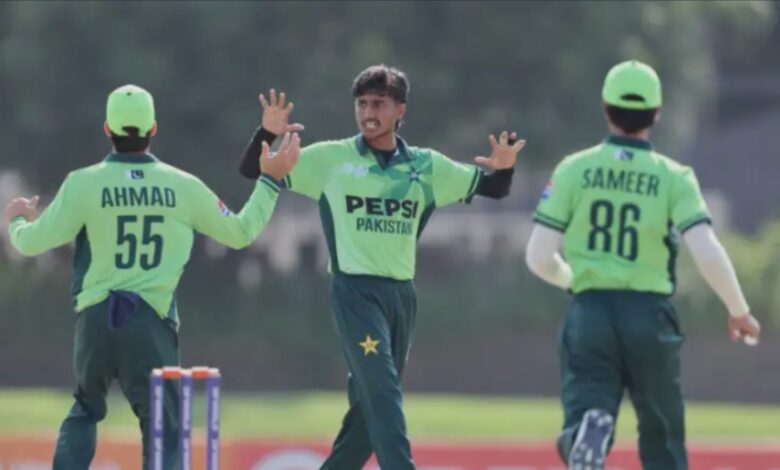
New Delhi, Nov 20 (IANS) Former Pakistan cricketer Danish Kaneria launched a scathing criticism of Pakistan’s bowling and team management, saying the country’s cricket had witnessed a significant decline in quality and that the defeat should serve as a wake-up call for its cricket authorities.
Kaneria also said India were justified in celebrating their victory over Pakistan in the U-19 Asia Cup final, arguing that the Pakistani players had provoked their opponents during the match and should have been prepared for an equally aggressive response.
“If you look at it the other way, if Pakistan had won, they would have done the same thing. They would have celebrated with the same aggression. If Indian kids did it, what’s wrong with that? They didn’t abuse anyone. They showed their aggression. It’s not written anywhere in the ICC rules that you can’t show aggression. You can show it, but there is a limited boundary,” Kaneria told IANS.
“Pakistan showed aggression earlier. The match wasn’t over yet. What happens there is that you provoke them. You started everything. And when it was your turn to take a return, you couldn’t tolerate it. So you should learn to tolerate. When you provoke, it’s very important to learn to tolerate. Because if you have so much power that you can provoke, you should have so much power that you can tolerate,” he said.
The former leg-spinner said India showed aggression at the right time, after securing the victory, while Pakistan’s players did so before the contest was decided. He also felt the reaction to India’s celebrations overlooked the Pakistani players’ behaviour during the match.
“India showed aggression at the right time after winning. Pakistan showed aggression at the wrong time, even while the game was going on. Whatever they did, if I win, you can show aggression then. You can see what you did after scoring 100 or whatever you did. How did you behave? India behaved after winning,” he said.
“Pakistan media channels and a lot of people said India behaved like this. But you don’t see what you did after scoring 100. You start with the finger, then when the other person responds, you get angry. It should not be like that. You should accept it and say, ‘Okay, we made a mistake. We started it. We did everything, and after that we had to suffer.’ I think Pakistan should learn this lesson,” Kaneria said.
Kaneria, who said he had watched the match after being urged to do so, acknowledged that Pakistan had competed well with the bat but was highly critical of its bowling plans and execution in the closing stages.
“It was a very exciting India-Pakistan final. There was a big score on the board. Pakistan did well with the batting, but their bowling and the strategy were below par. There is such a big coaching staff, and there are former Test cricketers, but they had no idea where to utilise them, which bowler to bring in, where to get the bowling done and what to do. It looks so bad,” he said.
Questioning Pakistan’s decision to use a spinner in the final over, Kaneria said the team had failed to make the right calculations despite having fast-bowling options available.
“India were playing the last wicket. They needed 50 runs, but what is this bowling? Pathetic bowling. You give the last over to a spinner whose ball doesn’t turn. The one who doesn’t know how to turn, you get him to bowl. How did he come into the team? Who picked him? Didn’t you have fast bowlers to bowl the last over? What did the captain do? The calculation was wrong,” he said.
“You’re playing the last wicket, and you have a spinner. Where are you playing? The tailender is playing. You can’t turn him from the front. You’re bowling on half wickets. What kind of bowling is this? You’re giving the last over to the same bowler who has already been hit. Where are your fast bowlers? You say Pakistan produces fast bowlers, but where are they?”
Kaneria said the standard of Pakistan cricket had deteriorated across age-group and senior levels, adding that the country was no longer producing players capable of representing the national team consistently over several years.
“I don’t know what has happened to Pakistan’s team and bowling. The quality of cricket has gone so down. I have stopped looking at it. I don’t feel like watching it. What is this cricket? Even in U-19, India played very well. I think India’s talent is always increasing. There is so much talent. These kids will play for India’s national team. I have seen a lot of players in this team, bowlers and batsmen, who will represent India in the coming times,” he said.
Kaneria also questioned the age and maturity of the Pakistani players, saying India’s young team had impressed him with its performances throughout the tournament. “I was watching the highlights during the day. My mother also watches cricket when I play. She said, ‘This Indian team, so many kids are playing. Is this Pakistan’s national team playing U-19?’ It looked like they were quietly older. It didn’t look like that, right?” he said.
On the broader decline in Pakistan cricket, Kaneria said the country had once been renowned for producing world-class fast bowlers and spinners, but believed that legacy was no longer reflected in the current generation.
“Pakistan was the country where, if I talk about leg-spin internationally, there was an era when leg-spin disappeared for a few years. Abdul Qadir brought it back. The great Abdul Qadir came, then Shane Warne came. After that, off-spin was a bit slow. There were good spinners from India. Saqlain Bhai took it to the next level, then Muralitharan came, Mushtaq Bhai came, and after Mushtaq Bhai, I came,” he said.
“Pakistan always had a battery of Wasim Bhai, Waqar Bhai, and Shoaib Akhtar. Mohammad Asif came. But now I see what kind of cricket they play. They don’t have the quality of players. I’m talking about U-19. When we played the U-19 World Cup, our entire 15-member squad could play for Pakistan. That was because of the quality,” he added.
Kaneria said the decline was linked to the lack of importance given to domestic cricket and the lower levels of the game, while contrasting the support provided to players in India with the situation in Pakistan.
“It’s only because of the lack of importance given to domestic cricket and the lower levels of the game. In India, players are being produced because they have a system. The way the BCCI takes care of its players and protects them, even if there is a question, they are there. But here, if there is a question, the PCB says, ‘Who are you? You are on your own.’ I don’t even know you. It’s not happening just now; it has been going on for years,” he said.
“Players don’t think they are safe. Players don’t know what to do. They need to look back and search. This is not on. You lose eight or nine wickets and still concede so many runs. Where did you get that calculation from? Did you have a good calculation? The coach who is sitting there, how much cricket has he played? How much cricket has Ishtiaq played? He is sitting there. What cricket?”
Kaneria clarified that his criticism was directed at the team’s planning and the wider cricket structure, rather than personal animosity towards the individuals involved in the coaching set-up.
“He is a friend. I have great respect for them. They are my friends. But they don’t know how to make a strategy. Does the Indian team have a coach who is sensible and mature and has played 70-80 Tests? You put two or three Tests. I couldn’t understand it. It was very bad to see that after losing eight or nine wickets, you conceded 50 runs. It means you have put a stain on Pakistan’s bowling history,” he said.
The former Pakistan cricketer also expressed concern over the country’s inability to develop players who could serve the national team over an extended period. “You are not producing quality cricket. You are not bringing quality players who can represent the country for five to 10 years. Similarly, players are not being produced. That is my only point,” he said.
Despite his criticism of Pakistan, Kaneria praised India’s performance in the final and said the team deserved the title for the way its players handled the pressure and fought throughout the tournament.
“No doubt, Pakistan also put up a good show. But I think India deserves the victory. The way they played, with dedication, the way the kids worked hard and played throughout the tournament, I think they deserved to win. There are always two teams, but the team that plays better wins. The one who has a clear intention, who plays with good intentions and plays for his country, wins,” he said.
India defeated Pakistan by one wicket in a thrilling final in Al Amerat to claim a record-extending ninth U-19 Asia Cup title. Chasing a daunting target of 338, India reached 339/9 on the final delivery, with Mohit Ulva sealing the victory with a boundary.
The chase was built around a 95-run opening partnership between captain Lakshya Raichandani and Aaryavir Sehwag. Lakshya scored 80 off 101 deliveries, while Aaryavir contributed 58 off 61 balls.
Pakistan fought back by picking up wickets at regular intervals and reduced India to 252/8, putting themselves in a strong position to defend the total. However, Manal Chauhan and Ulva turned the contest around with a crucial 57-run stand off just 35 deliveries.
Chauhan scored 47 off 32 balls, while Ulva remained unbeaten on 49 off 26 deliveries, hitting five fours and three sixes. Ulva’s boundary off the last ball completed India’s dramatic one-wicket victory.
Earlier, Pakistan posted 337/9 after opting to bat, with Usman Khan top-scoring with 107 off 111 balls. Abdul Qadir made 80 off 54 deliveries, while captain Farhan Yousaf contributed 63 off 60 balls.
The victory extended India’s record in the tournament, taking its tally to nine U-19 Asia Cup titles.
–IANS
hs/bsk/