
Madras HC strikes down TN rule restricting interstate transportation of minerals

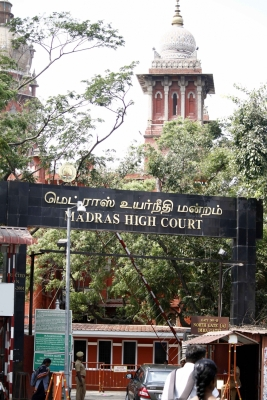
Chennai, Nov 17 (IANS) In a significant ruling, the Madras High Court on Tuesday declared unconstitutional a statutory provision empowering the Tamil Nadu government to impose temporary restrictions on the transportation of minerals to other states, and consequently quashed the orders banning the interstate movement of rough stones and their aggregates.
The First Division Bench comprising Chief Justice Sushrut Arvind Dharmadhikari and Justice G. Arul Murugan held that Rule 3A of the Tamil Nadu Prevention of Illegal Mining, Transportation and Storage of Minerals and Mineral Dealers Rules, 2011, was unconstitutional and beyond the scope of the central legislation governing mining activities.
The provision had been incorporated into the statutory rules through an amendment notified on July 9. Following the amendment, the Director of Geology and Mining issued an order on July 27 imposing a three-month ban on the transportation of rough stones and their aggregates to other states, with exemptions granted to Puducherry and the Karaikal region.
The restriction, intended to ensure adequate availability of construction materials within Tamil Nadu, was subsequently extended for another three months with effect from October 27.
The court delivered its verdict on a batch of writ petitions filed by quarry and crusher owners, industry associations and individual operators before the principal seat of the High Court in Chennai and its Madurai Bench.
The petitioners challenged both the constitutional validity of the amended rule and the subsequent orders restricting the interstate transportation of minerals.
Under Rule 3A, the Director of Geology and Mining was authorised to regulate or temporarily prohibit the movement of boulders, crushed stones, manufactured sand (M-sand), metal jelly, ballast and other materials used in building and road construction beyond the state’s borders.
The petitioners argued that the restrictions violated Article 301 of the Constitution, which guarantees freedom of trade, commerce and intercourse throughout India. They also questioned the validity of the provision under Article 304(b), which empowers state legislatures to impose reasonable restrictions on trade and commerce in the public interest, subject to constitutional requirements.
Further, the petitioners maintained that the amendment exceeded the powers conferred on state governments under Section 23C(1) of the Mines and Minerals (Development and Regulation) Act, 1957.
The High Court’s ruling effectively removes the restrictions imposed under the amended provision, providing relief to quarry operators and crusher units engaged in the interstate supply of construction materials.
–IANS
aal/dpb