
COP31: Electrification key driver in global commitment to transition away from fossil fuels

Antalya (Turkey), Nov 17 (IANS) The first Global Stocktake established a clear international commitment to transition away from fossil fuels in energy systems in a just, orderly and equitable manner. The focus has since shifted towards translating that commitment into concrete action, with greater emphasis on implementation, investment and credible national transition strategies.
The COP30 Presidency’s roadmap for transitioning away from fossil fuels, alongside the Santa Marta Conference scheduled for 2026, has helped sharpen the global debate around the practical challenges of implementation. The central question is how countries can turn the agreed global ambition into viable, investment-ready national pathways that accelerate the shift towards cleaner energy systems.
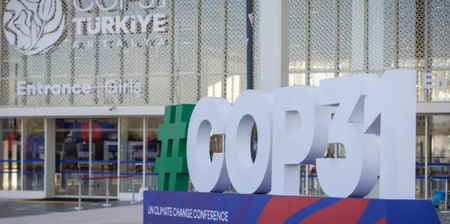
As the United Nations Climate Change Conference (COP31) enters its final week of negotiations, electrification is emerging as a critical area of focus. The discussions offer an important opportunity to connect the broader commitment to move away from fossil fuels with practical solutions, demonstrating how electrification can serve as a powerful catalyst for reducing fossil fuel dependence across economies. They also provide an opportunity to establish a constructive platform for advancing implementation beyond COP31 and into 2027.
Upcoming milestones, including the Tuvalu-Ireland conference, the road towards COP32 and, ultimately, the second Global Stocktake, will be important in maintaining momentum and translating international commitments into measurable progress, believe experts advocating to accelerate the transition away from fossil fuels.
For businesses, the debate is increasingly centred on how the transition can be delivered in ways that are economically viable, commercially scalable and attractive to investment.
Governments have a pivotal role in creating the enabling environment through consistent national and regional policies, clear targets, effective regulation and robust financing frameworks that provide certainty for investors and industry.
The private sector, meanwhile, can play an equally important role by demonstrating where electrification is already replacing fossil fuels at the point of use, identifying sectors and markets where investment is gaining momentum, and highlighting the policy, infrastructure and financing constraints that continue to impede progress.
Ultimately, accelerating electrification will require coordinated action across governments, industry and financial institutions. Aligning policy ambition with commercial realities and investment opportunities will be essential to turning the global commitment to transition away from fossil fuels into tangible outcomes on the ground.
Against this backdrop, parliamentarians from the Parliamentarians for a Fossil-Free Future network are calling on the COP31 Presidencies — Turkey and Australia — to deliver concrete, measurable climate finance commitments to accelerate the transition away from fossil fuels and ensure that developing countries are not left to bear the costs of the global energy transition.
In a statement assessing the first week of negotiations in Antalya, the lawmakers warn that climate ambition cannot translate into meaningful action without adequate, predictable, public and non-debt-creating finance from developed countries. The parliamentarians stress that climate finance is not a matter of charity, but an obligation established under Article 9.1 of the Paris Agreement, which requires developed countries to provide financial resources to developing nations.
Their appeal comes amid growing concerns over the accelerating climate crisis. Global temperatures have already exceeded 1.5 degrees Celsius above pre-industrial levels in individual years, while scientific assessments warn of increasing risks associated with critical climate tipping points, including the degradation of the Amazon rainforest and the collapse of major ice sheets.
Responding to the COP31 cover text published on Monday, ‘We Mean Business Coalition’ has welcomed the inclusion of a global electrification target in the first draft, calling on governments to build on the text and secure an ambitious agreement.
Gillian Nelson, Director of Policy and Strategy, We Mean Business Coalition, told IANS: “The inclusion of a global electrification target in the draft cover decision is an important step forward. The text recognises both the role electrification plays in cutting emissions immediately, even while power systems are still transitioning to clean power. The draft also highlights the significant benefits to energy security, energy efficiency, economic development and energy access — particularly in conjunction with delivering on the commitments made in Dubai on renewable energy and efficiency.”
“Governments now have an opportunity to agree a target that will drive investment, strengthen energy security and accelerate the transition away from fossil fuels. The priority must be to secure the broadest possible participation and turn that ambition into action,” Nelson said.
On the electrification goal, Mohamed Adow, Director of energy and climate think tank ‘Power Shift Africa’, told IANS that “if historic polluters are serious about reducing global temperatures, they need to rapidly phase out fossil fuels and share the technological and financial resources to help developing countries accelerate the energy transition”.
The IEA’s special report for the COP31 Presidency reaches the same conclusion: faster electrification brings emissions down even with a power mix based on today’s policies. And as grids get cleaner, the savings grow for the whole working life of every EV, heat pump and electrified process.
(Vishal Gulati can be contacted at vishal.g@ians.in)
–IANS
vg/dpb