

Kochi, Nov 10 (IANS) Organic waste from households, markets and other sources could become a major source of protein for India’s aquaculture sector, the Indian Council of Agricultural Research (ICAR), the country’s premier agricultural research body, said on Tuesday.
Dr Devika Pillai, ICAR Assistant Director General, said the technology could help reduce the industry’s dependence on fishmeal made from wild fish.
It could also help tackle two major problems, rising fish feed costs and the growing burden of waste disposal in India.
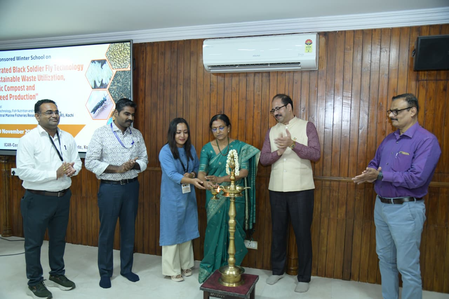
She was speaking at the inauguration of a 21-day winter school on integrated Black Soldier Fly-based feed technology at the ICAR-Central Marine Fisheries Research Institute (CMFRI) here on Tuesday.
Black Soldier Fly larvae can feed on biodegradable organic waste and convert it into protein rich biomass.
This can be used as an alternative ingredient in fish feed.
The aquaculture sector is facing growing pressure due to the limited supply and rising prices of conventional feed ingredients, especially fishmeal, Dr Pillai said.
India generates an estimated 1.71 lakh to 1.90 lakh tonnes of municipal solid waste every day.
Biodegradable waste accounts for 50 to 60 per cent of this.
Converting this waste into protein through Black Soldier Fly-based feed technology could open up new opportunities by linking waste management with food production, she said.
She stressed the need to develop feed ingredients from locally available resources.
These include insects, microalgae, seaweeds, aquatic plants, fermented products and waste from fruit and vegetable processing.
CMFRI has developed and patented a technology that uses BSF larvae to turn organic waste into nutrient rich biomass containing protein and fat.
Four startups are now engaged in commercial production of fish feed using this technology.
CMFRI Director Dr Grinson George said the winter school aims to build technical skills and promote new methods of fish feed production.
With global demand for aquatic food rising, the technology could help improve fish production and make aquaculture more sustainable, he said.
The winter school is organised by CMFRI’s Marine Biotechnology, Fish Nutrition and Health division.
–IANS
sg/rad