
Efforts continue to control stubble burning as Delhi braces for another winter and smog

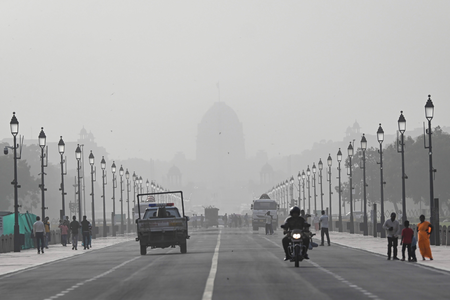
New Delhi, Oct 14 (IANS) It’s once again time for people in Delhi to replenish face masks and take out woollens for the winter ahead as North India enters the paddy-harvest season, turning attention to an annual phenomenon of stubble burning, a practice that has become closely associated with severe winter smog in the National Capital Region (NCR).
While crop residue burning is not the sole reason for pollution, scientific studies and government assessments have identified it as a significant seasonal factor around October-November, when weather conditions trap pollutants close to the ground.
In Punjab, Haryana, and parts of western Uttar Pradesh, farmers harvest paddy in late September and October and need to quickly prepare fields for sowing wheat. The gap between the two is short, often of just two to three weeks where many farmers opt to burn paddy straw in the fields in a cheap and fast practice, but harming the environment. A large portion of the paddy straw or crop residues are burnt in the field primarily to clear it after the harvest of the preceding crop for the sowing of the next crop, causing phenomenal pollution problems in the atmosphere and huge nutritional loss and physical health deterioration to the soil, observed the government’s Crop Residue Management Operational Guidelines 2026.
The burning of one tonne of paddy straw releases an estimated 3 kg particulate matter, 60 kg Carbon Monoxide, 1,460 kg Carbon Dioxide, 199 kg ash, 2 kg Sulphur Dioxide and other pollutants, contributing significantly to deteriorating air quality, affecting human health and substantial loss of soil nutrients and organic matter, it added.
Significantly, recent reports suggest that between September 15 and October 12, stubble-burning incidents declined significantly compared with the corresponding period last year. Haryana recorded a reduction of 53.3 per cent, while Uttar Pradesh registered a decline of approximately 32 per cent. However, Madhya Pradesh and Rajasthan have recorded higher incidents, raising concerns in the Union Agriculture Ministry.
Since 2018, the Centre has implemented the Crop Residue Management (CRM) scheme aimed at supporting farmers with machinery and alternative residue-management systems. Between 2018-19 and 2025-26, the Union government released Rs 4,266.47 crore to states under the scheme. This included Rs 2,056.50 crore for Punjab, Rs 1,171.71 crore for Haryana, Rs 868.67 crore for Uttar Pradesh and Rs 59 crore for Madhya Pradesh.
For the current financial year, an allocation of Rs 592.57 crore had also been earmarked, of which Rs 430.87 crore had already been released. However, slow utilisation of the allocated funds remains a concern.
Meanwhile, more than 3.23 lakh crop-residue management machines and over 41,900 Custom Hiring Centres (CHC) were established during this period. CHCs are designed to provide farm machinery on rent so that even the smallest landholder can access the tools needed to farm productively and sustainably. Moreover, revised guidelines allow financial support of up to 65 per cent for projects that develop straw supply chains and feedstock for biomass, biofuel and pelletisation industries. Thermal power plants, compressed biogas facilities and biomass-energy projects are increasingly being viewed as long-term solutions because they transform agricultural waste into fuel rather than allowing it to be burnt in fields.
The Commission for Air Quality Management (CAQM) has also intensified monitoring efforts. Flying squads have been deployed across Punjab and Haryana during harvest seasons, while dedicated monitoring cells oversee compliance and enforcement.
More recently, authorities have begun examining not just the number of fires detected by satellites but also the actual area burned, after concerns emerged that fire-count data may understate the extent of residue burning.
Yet, the issue remains deeply entangled in politics. Delhi, governed at different times by parties opposed to those ruling Punjab, Haryana or the Centre, has frequently witnessed a blame game. Inter-state coordination has therefore been difficult. Political disagreements over responsibility, funding, enforcement and compensation for farmers have repeatedly slowed implementation of long-term solutions.
The Supreme Court has had to intervene on several occasions, seeking explanations from authorities and directing coordinated action among Punjab, Haryana, Uttar Pradesh, and central agencies.
A high-level inter-ministerial review meeting was held on Tuesday to oversee implementation of crop residue management in the ongoing paddy harvesting season with concerned Union and State ministers in attendance. This harvest season will test whether the combination of subsidies, alternative technologies, biomass markets and stricter monitoring can finally produce a sustained reduction in stubble burning.
–IANS
jb/uk