Trump should address Beijing’s ‘ethnic unity law’ during meeting with Chinese President

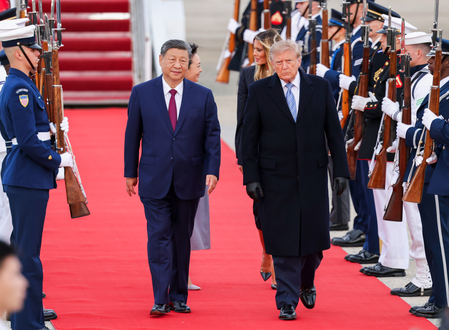
Washington, Sep 24 (IANS) United States President Donald Trump should raise Beijing’s ethnic unity law directly with Chinese President Xi Jinping during their meeting in Washington and make clear that any effort to enforce it against people in the US will not be “tolerated”, a report has stated.
No foreign government should have the authority to dictate what people in the US or other democratic societies say, believe, teach their children or advocate for. Washington should make clear that China’s “ethnic unity” law has no jurisdiction inside American borders. Omer Kanat, Executive Director of the US-based Uyghur Human Rights Project, wrote in The Diplomat.
“When Chinese President Xi Jinping arrives in Washington, the agenda will be crowded: trade, technology, fentanyl, Taiwan, and global security. But there is another issue that the United States cannot afford to leave out: China’s newly adopted Law on Promoting Ethnic Unity and Progress,” Kanat stated.
“US President Donald Trump should raise a question that goes to the heart of American sovereignty: Why are Uyghur Americans being forced to choose between exercising their freedoms here and protecting their relatives from retaliation in China?” he added
China’s National People’s Congress passed the Law on Promoting Ethnic Unity and Progress in March, and it subsequently came into effect on July 1.
Beijing described the legislation as a measure to promote harmony among China’s ethnic groups, including Uyghurs, Tibetans, Southern Mongolians and others.
Kanat argued that the law does not protect unity but codifies the forced assimilation campaigns Uyghur and other communities have long experienced.
“Since 2017, the Chinese government has waged a systematic campaign to extinguish Uyghur national identity, religion, and cultural life. With the ethnic unity law, Beijing has codified and expanded this assault. Americans must pay particular attention to the law’s reach beyond China’s borders,” he added.
Citing certain provisions within the law, Kanat said that organisations and individuals outside China could be held legally accountable for actions deemed to “undermine ethnic unity and progress or create ethnic division.”
China’s vice justice minister openly defended this extraterritorial provision as “legitimate, lawful, necessary, and feasible.”
Highlighting the wider implications of the provisions, Kanat said. “That is an unmistakable message to Uyghurs, Tibetans, Hong Kongers, and other communities: Beijing claims the right to police our identities even outside its borders. But it is also a threat to all Americans, even those without family ties in China. Any person who expresses a view China deems as contrary to ethnic unity can be targeted under the new law.”
He stressed that Beijing’s ethnic unity law is not merely a human rights concern but poses an immediate challenge to US sovereignty.
–IANS
scor/as