Pakistan’s ‘constitutional coup’ enters new phase as Asim Munir pushes idea of creating new provinces

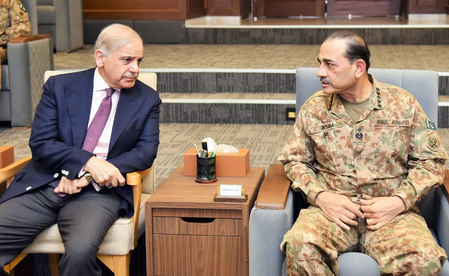
London, Sep 22 (IANS) Pakistan is not a functioning democracy, and the proposal to create new provinces has emerged not from a national debate, a parliamentary commission or a movement towards greater devolution. Instead, it has come from Asim Munir in his latest role — Chief of Defence Forces, army chief, nuclear custodian, lifetime beneficiary of constitutional immunity and now, apparently, part-time cartographer, a report has detailed.
The push for new provinces came directly from Munir during an address to business leaders in Karachi. Pakistan’s Interior Minister Mohsin Naqvi, one of the military establishment’s most active civilian allies, swiftly urged political parties to “settle” the matter. MQM-P leaders soon followed, openly endorsing what they described as Munir’s “vision”, a report in Parrhesia News detailed.
Citing reports in the Pakistani media, it said proposals envisaged restructuring the country’s four provinces into as many as 12 administrative units, but no official map, detailed draft or clear criteria had so far emerged.
“This deliberate vagueness is not incidental. It allows the establishment to market the proposal simultaneously as administrative modernisation, economic decentralisation, ethnic accommodation and better governance, while avoiding the only question that matters: who will gain power from the new arrangement? The answer is unlikely to be the people living in those provinces,” the report mentioned.
Highlighting that Pakistan’s constitutional coup has unfolded in stages, it said the February 2024 elections produced a Parliament whose composition bore only a tenuous relationship to the actual votes cast. The state had dismantled former Prime Minister Imran Khan’s party, jailed its leadership, stripped it of its electoral symbol and ensured that the victorious independents were unable to convert their popular mandate into a government.
“The 26th Amendment then weakened judicial independence and gave the political executive greater influence over the appointment of the chief justice. The 27th completed the personal enthronement of Munir: it placed the armed services under his unified command, extended his tenure, reinforced executive control over constitutional adjudication and granted lifetime immunity to the only serving five-star officer in the country. Pakistan did not abolish democracy. It preserved the scenery while transferring the theatre to Rawalpindi,” Parrhesia News noted.
Emphasising that the proposed reorganisation of the provinces would be the logical next step in unfolding constitutional coup, the report said, “After neutralising elections, Parliament and the judiciary, the military establishment is turning towards the last remaining centres of autonomous political power: the provinces. The objective is not necessarily to abolish federalism outright, but to break it into pieces too small, too dependent and too politically fragile to resist the centre.”
–IANS
scor/as