Decision on Trinamool symbol, Bengal bypoll result will shape Mamata’s future political path

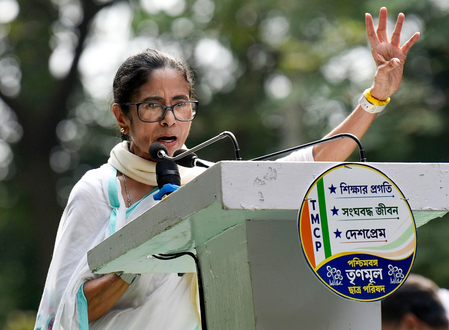
New Delhi, Sep 14 (IANS) Trinamool Congress founder and former West Bengal Chief Minister Mamata Banerjee has decided to stay out of poll contest in next month’s Assembly by-elections despite being urged and encouraged by colleagues – both former and present – renewing discussions over her larger political interests.
Her 15 years of uninterrupted rule ended this year with the Bharatiya Janata Party (BJP) winning convincingly, and her close aide-turned-bitter adversary Suvendu Adhikari anointed the Chief Minister.
Since then, the 71-year-old leader has on occasions reiterated her intent to rebuild her organisation and simultaneously strengthen the Opposition INDIA platform, emphasising unity against the BJP juggernaut.
Interestingly, she has now extended a hand of alliance towards arch-rival Communists, and the Congress from where she broke out in 1998.
After the disintegration of Trinamool Congress, Mamata Banerjee-led faction is now involved in a bitter fight with the rival Trinamool group led by Ritabrata Banerjee to retain the original party name and its logo of twin florets, which she claims to have created herself.
Political circles in West Bengal are aware of the influence the former Chief Minister enjoyed in grassroots that led to the fall of the Left Front government in 2011 after ruling uninterruptedly since 1977.
But now, allegations of fraud, embezzlement, bribery, extortion, and smuggling rackets have plagued the Trinamool Congress even as rival groups clashed in quest for power.
While she occasionally did exhibit an iron hand — publicly chiding party members, dissolving and recreating leadership committees — she was largely seen as watching helplessly while her nephew Abhishek Banerjee assumed control of the organisation.
This has been voiced openly by party turncoats, and covertly by others still in her faction.
She had also admitted that the responsibility of running the administration did perhaps cost the organisation somewhat, and promised to rebuild the party from grassroots.
Simultaneously, Mamata Banerjee has linked her fight with the broader INDIA bloc, the acronym for Indian National Developmental Inclusive Alliance (INDIA) bloc her followers credit her with.
Though parties like Arvind Kejriwal-led Aam Aadmi Party (AAP) and M.K. Stalin’s Dravida Munnetra Kazhagam (DMK) have since ended ties, some leaders believe that Mamata’s personal relation may be convince them to return for 2029 Lok Sabha election.
Many of the constituents, who stand against the Congress leading the platform, see in Mamata Banerjee an alternative who may perhaps be more involved in regional politics than for a strong pan-India footprint.
But, some analysts say, Mamata’s insistence on strengthening the INDIA bloc reflects her strategy to position herself as a national Opposition leader.
Meanwhile, the upcoming West Bengal by-elections will be a crucial test of her faction’s strength and her ability to rejuvenate the party or fulfil any national ambition.
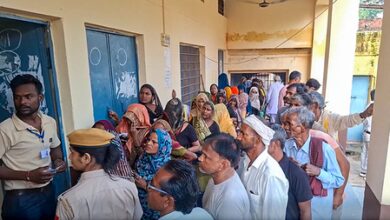
By-elections in West Bengal will be held on October 6 at Rejinagar and Nandigram Assembly constituencies after winners Humayun Kabir and incumbent Chief Minister Suvendu Adhikari resigned from the respective seats.
While the former chose to retain Naoda, Adhikari chose to represent Bhabanipur, where he defeated his predecessor and once-mentor Mamata Banerjee by more than 15,000 votes, against his victory margin of less than 10,000 votes over runner-up Pabitra Kar of Trinamool Congress.
Kabir had extended an “invitation” to Mamata Banerjee to contest from Rejinagar, asserting that he can ensure her victory from the seat, and leaders of the Ritabrata-led faction insisted they would not field a candidate in Nandigram if Mamata chose to contest herself.
Kabir, representing his Aam Janata Unnayan Party (AJUP), won Rejinagar by a margin of more than 58,000 votes, clinching 51.62 per cent of the mandate.
In Naoda, the margin was of less than 28,000 votes, where the AJUP Chief got just about 39 per cent of the mandate.
Interestingly, though both these seats are in Murshidabad district, where Muslims comprise an estimated 70 per cent of the total population, the BJP finished runners-up, pushing the Trinamool to the third spot, portraying the overall polarisation witnessed this time.
Amid the change, Mamata-led Trinamool faction now links her fight for the party symbol and Opposition unity to the broader INDIA alliance, saying that Opposition solidarity is essential to counter the BJP’s dominance once she asserts power over her own party.
–IANS
jb/khz