
Poor connectivity, weak disaster response expose governance crisis in PoGB

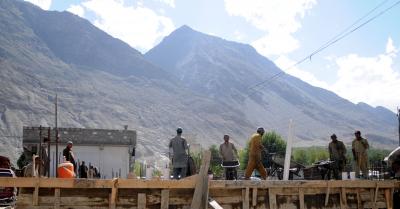
Islamabad, Sep 5 (IANS) Authorities in Pakistan-occupied Gilgit-Baltistan (PoGB) have raised concerns over poor cellular connectivity, saying it has not only affected tourism but has also hampered relief and rescue operations in the region during emergencies, local media reported.
Addressing a meeting at its so-called ‘legislative assembly’, local PoGB leader Amjad Hussain stressed the need for satellite connectivity to monitor some 7,000 glaciers and improve disaster preparedness in the region.
He cited the recent flash floods in Nepal as an example of the importance of such connectivity, particularly amid the poor preparedness in the region, leading Pakistani daily Dawn reported.
Reports suggest that the region continues to face slow and unreliable internet connectivity, which affects tourism and poses a major obstacle to development.
At the same time, frequent floods and other natural disasters have caused extensive damage, while gaps in disaster-management capacity and the timely delivery of relief to affected communities remain key challenges.
The concerns over connectivity and disaster preparedness come against the backdrop of wider criticism of governance in PoGB, with an earlier report describing the region’s plight as a consequence of flawed governance and the normalisation of a political charade.
It noted that every five years, polls are held in PoGB under a constitutionally undefined framework that changes governments without changing the actual structure of power.
“The process is at its core a ritualistic transfer of authority among federally controlled political actors while fundamental questions of constitutional status, political rights, institutional accountability, etc, remain unresolved. This ambiguity facilitates elite capture through a flawed political system that enables control over local resources without meaningful accountability. Public resources continue to be consumed by expanding bureaucratic structures, patronage networks and non-development expenditures,” Afzal Ali Shigri, a former IGP of Sindh province who belongs to PoGB, wrote in Dawn.
“More troubling is the ill-defined governance structure in which critical decisions, including appointments to senior judicial and institutional positions, are made through opaque processes. Such a system effectively guarantees immunity for unaccountable decision-makers, while ordinary citizens continue to bear the burden of weak institutions, unemployment, and political uncertainty. This has reduced Sunday’s election to an exercise in futility,” wrote Shigri.
Instead of a locally rooted political structure, governance in PoGB has remained dominated by the Pakistan Muslim League-Nawaz (PML-N), Pakistan Peoples Party (PPP), and Pakistan Tehreek-e-Insaf (PTI), who considered the region through the lens of national power politics, strategic utility, electoral expansion, patronage and resource control, instead of genuine political empowerment.
–IANS
scor/as