
Pakistan mishandled funds linked to housing reconstruction for Balochistan flood victims

Islamabad, Aug 24 (IANS) The World Bank has expressed dissatisfaction with Pakistani authorities’ handling of funds related to housing reconstruction for flood victims in Balochistan province. The World Bank’s reaction came after Pakistani authorities stopped housing support and redirected resources for infrastructure projects, a report has detailed.
Country Director for the World Bank in Pakistan, Bolormaa Amgaabazar, warned that exclusion of eligible families could increase poverty and vulnerability in Balochistan. According to the World Bank, 119,049 households had already been verified and considered eligible for housing support; however, they remain without identified financing. Around 84 per cent of eligible families have been identified as ultra-poor or vulnerable, a report in ‘Brussels Signal’ mentioned.
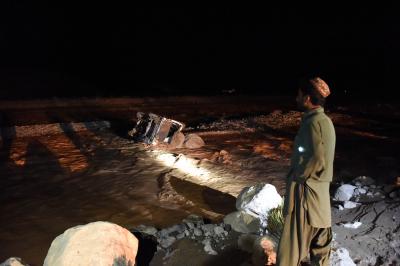
The international community provided funds after the 2022 floods in Pakistan destroyed homes, crops, roads and livelihoods, with Balochistan being the most affected province. The international community’s funding was not only aimed to repair the damage but also at making impacted residents more resilient to face future disasters.
The European Union and its member states together provided over €930 million in the aftermath of the floods, according to the EU delegation in Islamabad. In May 2023, the World Bank approved €184 million for the Integrated Flood Resilience and Adaptation Project (IFRAP), aimed at supporting flood-affected people. The programme included funds for reconstructing around 35,100 homes to more resilient standards, the rehabilitation of roads, irrigation systems, water infrastructure and other essential services.
“The World Bank’s warning is especially striking because the floods damaged more than 190,000 housing units across Balochistan. What began as an emergency reconstruction challenge has therefore become a test of whether Pakistan can translate internationally financed commitments into results for its most vulnerable citizens. The longer the financing gap persists, the harder it becomes to describe it as a temporary problem rather than a failure of delivery and accountability,” political analyst Dimitra Staikou wrote in Brussels Signal.
As the programme expanded, additional funding was requested for extending housing reconstruction to additional eligible households in Balochistan, increasing the number of housing grants from 35,100 to 102,000. By December 2025, the World Bank revealed that 231,749 beneficiaries had been verified. However, on June 22-23, 2026, the Project Steering Committee, chaired by Pakistan’s planning minister Ahsan Iqbal and Balochistan Chief Minister Sarfraz Bugti, stopped housing support and redirected resources towards infrastructure and refused to take the additional USD 180 million offered by the World Bank, leaving 119,049 eligible households without an identified source of financing.
In a report issued in December 2023, the UN Office for the Coordination of Humanitarian Affairs (OCHA) said that Pakistan faced heavy rains and floods between June and August 2022. Around 33 million people were affected, and 20.6 million people required lifesaving assistance, half of whom were children. A total of 7.9 million people were displaced in Pakistan, with at least 664,000 individuals moving into relief camps and informal sites.
The floods in Pakistan damaged or destroyed over 2.3 million homes and wiped out over 1.7 million hectares (4.4 million acres) of crops, while over 800,000 livestock perished, pushing more than 8 million residents into poverty, according to the National Disaster Management Authority (NDMA). In addition, more than 30,000 schools and 2,000 health facilities in Pakistan were damaged and needed to be repaired or entirely rebuilt.
–IANS
akl/as