
Broker’s chair sawed down to stool: Mecca Pact deals huge blow to China’s Middle East strategy

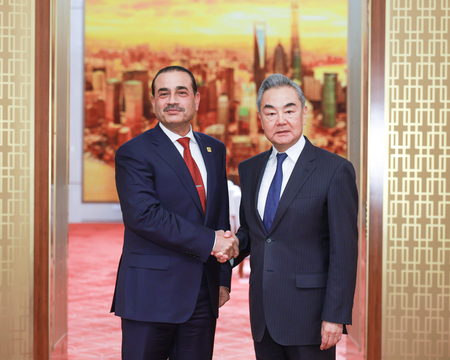
Cairo, Aug 22 (IANS) The Mecca Joint Defence Agreement may validate China’s rhetoric of multipolarity, but it also exposes the hollowness of its strategic substance. The post-American regional order Beijing advocated for the Middle East is taking shape without Chinese leadership, oversight or, potentially, even involvement, a report has stated.
It noted that the signing of the Mecca Joint Defence Agreement on August 7 by Saudi Crown Prince Mohammed bin Salman, Turkish President Recep Tayyip Erdogan and Pakistani Prime Minister Shehbaz Sharif immediately gave rise to two rival readings.
“The first, fashionable in Washington think tanks and echoed with quiet satisfaction in Chinese commentary, holds that the pact is another nail in the coffin of American dominance in the Gulf, and therefore, almost by definition, a win for Beijing. The second, far less comfortable reading is that China has just watched three of its most important Muslim-world partners build a security arrangement in which China has no seat, no veto, and no visibility,” a report in ‘The Cairo Review of Global Affairs’ detailed.
Highlighting that both readings cannot be valid over the same period, the report said that the gap between them raises two questions that will shadow Chinese policy for years: “Does a pact that visibly weakens Washington’s hold on Gulf security automatically serve Chinese interests, or does it merely flatter Chinese vanity? And can Beijing live with a multipolar regional environment it did not design, does not lead, and cannot steer, especially when that world is taking shape on its own western flank, among nations whose religious identity touches China’s rawest domestic nerve?”
The report noted that the pact may appear to work in Beijing’s favour in the short term, but over the long run, it could prove deeply unsettling for China. Far from being the strategic boon to Beijing that surface analysis may suggest, the Mecca Pact could emerge as one of the more quietly damaging developments China has encountered in a decade of largely favourable drift in the Middle East.
According to the report, Beijing’s discomfort is perhaps most pronounced regarding Iran. It noted that China’s Middle East strategy has relied on a delicate straddle: “buy Iranian oil at a discount, sell Saudi Arabia a partnership, and pose as the broker who reconciled the two in 2023. “
“That act assumed a region without hard blocs, but the Mecca Pact solidified one. Despite assurances by its members that the pact targets no one, Tehran will read it differently. It will see this Sunni-majority defence coalition—established in the middle of a war in which Iran is being pounded—as encirclement. If a battered, isolated Iran leans harder on Beijing, China inherits the cost of propping up a pariah. If China courts the pact’s members instead, it betrays the one Middle Eastern state most committed to it. The broker’s chair Beijing occupied so proudly in 2023 is being sawed down to a stool,” the report mentioned.
–IANS
scor/as