PoK unrest exposes cracks in Pakistan’s narrative on Kashmir issue: Report

Washington, Aug 15 (IANS) Amid escalating unrest in Pakistan-occupied Kashmir (Pok), Islamabad’s longstanding narrative of representing the interests of Kashmiri Muslims has suffered a major blow over the past two months as security forces have killed dozens of protesters, shut down the internet for weeks and expelled foreign journalists from the occupied territory entirely, a report has stated.
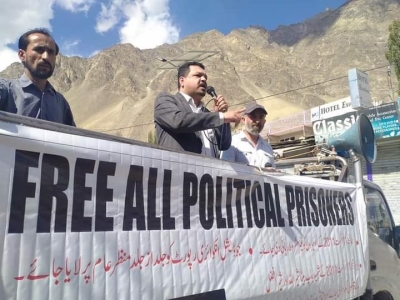
The unrest erupted in June as a “cost-of-living” protest movement, with Joint Awami Action Committee (JAAC) a coalition of local politicians, business leaders and activists rallying against soaring electricity prices and demanding fundamentally, greater political autonomy for the region.
Islamabad responded with suppression rather than negotiations: banning JAAC under counterterrorism legislation, severing internet access and killing several civilians during brutal crackdown by Pakistani forces in the occupied territory, according to a report in US-based Middle East Media Research Institute (MEMRI).
The report cited Kashmiri novelist and journalist Mirza Waheed describing the crackdown by Pakistani forces as marked by indiscriminate use of force, a communications blackout that isolated the region from the outside world, and wounded protesters avoiding hospitals out of fear of retaliation – hallmarks, he argued, of a state managing dissent through suppression rather than dialogue.
Islamabad proceeded with a three-phase round of so-called legislative assembly elections in PoK, held from July 27 to August 10, despite the continued internet shutdown and the ban on the political party representing the protest movement. Authorities put voter turnout at more than 50 per cent, a figure disputed by organisers of the boycott.
The government’s simultaneous decision to restrict international media from operating beyond Pakistan’s three major cities further deepened questions over the credibility and transparency of the electoral process, the report mentioned.
The newly issued Pakistan’s Foreign Media Facilitation Guidelines 2026 require all foreign journalists to secure a No-Objection Certificate (NOC) from Pakistan’s Ministry of Information and Broadcasting (MOIB) to travel to any city outside Islamabad, Lahore, and Karachi for news reporting.
“With foreign correspondents excluded from the affected areas and the internet down, independent verification of casualty figures, arrest numbers and the scale of the security response became nearly impossible during the weeks that mattered most,” the MEMRI report noted.
According to the report, the deeper challenge for Islamabad is ideological rather than merely administrative. Pakistan was founded on the two-nation theory, which argued that Muslim-majority communities in South Asia needed a separate state to ensure their security and self-rule. Yet the Muslim residents of PoK who live under Pakistani occupation, are now protesting against the Pakistani authorities.
The ban on leading civic coalition, prolonged communications restrictions and the killing of dozens of protesters have exposed Islamabad’s hollow promises of freedom and reforms in PoK, said the report.
“For the residents of Muzaffarabad watching their Internet stay dark through an election they were told to trust, the distinction between the label and the reality is not academic,” it added.
–IANS
scor/as