
‘Exceeded powers’: J&K High Court sets aside judicial magistrate’s show cause notice to Shopian District Collector

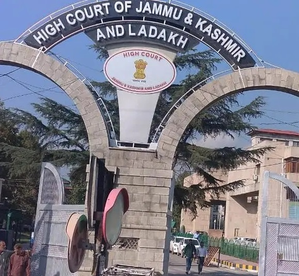
Srinagar, Aug 13 (IANS) The J&K and Ladakh High Court has set aside a show-cause notice issued by a judicial magistrate to the Shopian Collector, holding that the judicial official had exceeded powers.
Justice Rahul Bharti passed the order on August 7 while hearing a petition filed by IAS officer Shishir Gupta, presently posted as the Shopian Collector, against Ufaira Gulzar and others.
The notice was issued by a Judicial Magistrate First Class, Shopian, to the Collector over non-compliance with directions concerning recovery of maintenance. The case arose from maintenance proceedings initiated by the wife and daughter of the respondent No. 3 under Section 125 of the Code of Criminal Procedure, 1973.
The proceedings were instituted on April 20, 2023, and were finally disposed of by the Judicial Magistrate on December 4, 2025, directing payment of monthly maintenance of Rs 18,000, comprising Rs 10,000 for the wife and Rs 8,000 for the daughter. The maintenance was ordered to take effect from the date of institution of the proceedings. When the respondent failed to pay the recurring maintenance as well as arrears, the wife and daughter filed an execution application on December 9, 2025.
The High Court noted that the execution proceedings remained stalled as notices issued to the respondent repeatedly went unserved.
It observed that the Judicial Magistrate had not resorted to the available legal mechanism of issuing bailable or non-bailable warrants to secure the respondent’s appearance. Instead, on February 20, 2026, the Magistrate issued a levy warrant to the District Collector, Shopian, for recovery of the maintenance amount.
The High Court held that under the relevant provisions of the CrPC, an amount awarded as maintenance can be recovered through a warrant for levy of the amount as a fine. Once such a warrant is issued, recovery proceedings shift to the Collector, who can proceed against the movable or immovable property of the defaulter.
The matter took another turn when the Judicial Magistrate subsequently directed the District Collector to furnish details of the movable and immovable properties standing in the name of the maintenance defaulter.
According to the High Court order, the Assistant Commissioner Revenue, Shopian, furnished a detailed report on June 4 identifying immovable property belonging to respondent No. 3.
The Magistrate, however, appeared to take exception to the report because it identified only immovable property and did not identify movable assets.
A show-cause notice, dated July 10, was consequently issued to the Collector, prompting the Collector to approach the High Court.
The High Court found fault with this course of action, with Justice Bharti observing that after issuing the levy warrant to the Collector on February 20, the Magistrate had subsequently issued another levy warrant on July 4 for service upon the defaulter through the SHO, Police Station Shopian.
It held that there was no scope under the relevant provisions for such a second levy warrant and observed that the Magistrate had effectively frustrated the earlier levy warrant already issued to the Collector.
The High Court concluded that the Judicial Magistrate had exceeded the jurisdiction of the authority available under the Code of Criminal Procedure and consequently declared the July 10 show-cause notice illegal and set it aside. Rather than ending the recovery proceedings, however, the High Court directed the Judicial Magistrate to issue a fresh levy warrant addressed to the District Collector, Shopian.
The court directed that the warrant be executed by adopting the mode prescribed for recovery of arrears of land revenue under Section 91 of the Jammu and Kashmir Land Revenue Act.
It further directed the authorities to proceed with attachment and sale of the identified property of the maintenance defaulter so that the recovered amount could be placed at the disposal of the Judicial Magistrate for payment to the wife and daughter.
The order effectively puts the recovery process back on the statutory track, while ensuring that the maintenance awarded to the two beneficiaries is pursued through the legally prescribed recovery mechanism.
–IANS
sq/vd