
Delhi HC issues notice on PIL seeking menstrual hygiene infrastructure in police stations

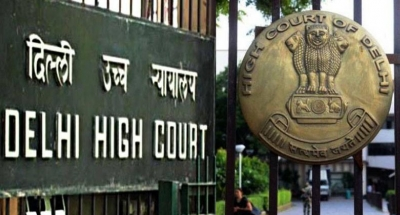
New Delhi, Aug 5 (IANS) The Delhi High Court on Wednesday agreed to examine a Public Interest Litigation (PIL) seeking installation and maintenance of sanitary pad vending machines and other menstrual hygiene facilities across police stations in the national capital.
A division bench of Chief Justice Devendra Kumar Upadhyaya and Justice Tejas Karia issued notice to the respondents, including the Delhi Police, and directed the Commissioner of Police to conduct a survey of all police stations in Delhi to ascertain the availability of functional sanitary pad vending machines.
The Commissioner of Police was directed to complete the exercise within six weeks and file a detailed status report indicating the availability of such facilities in all police stations, along with the steps proposed to provide the required infrastructure wherever it is lacking.
The matter has been listed for further hearing on September 23.
The PIL has been filed by NGO Justice for Rights Foundation against the Union of India through the Ministry of Home Affairs, Delhi Police through the Commissioner of Police, the Delhi government, and the Union Ministry of Women and Child Development.
According to the plea, the petition seeks directions to ensure the installation, maintenance and uninterrupted functionality of sanitary pad vending machines, sanitary waste disposal incinerators and exclusive hygienic washroom facilities for female police personnel across all police stations and police units in Delhi.
“The present Petition is instituted to secure and enforce the fundamental rights guaranteed under Articles 14, 15 and 21 of the Constitution, as access to basic menstrual hygiene and sanitation facilities forms an indispensable facet of the right to live with dignity, health, privacy and humane conditions of work,” the petition stated.
It said that RTI applications filed by the petitioner in July 2025 and the responses received from all 18 Delhi Police districts and units revealed that sanitary pad vending machines were available only in a “minuscule fraction” of police stations despite the presence of thousands of women police personnel across the force.
It further claimed that the RTI replies disclosed the absence of any budgetary allocation, policy, circular, standing order or institutional mechanism governing the provision of menstrual hygiene infrastructure for women police personnel.
The petition argued that female police personnel are often required to perform prolonged operational, investigative and law-and-order duties without being able to leave their place of posting, making access to menstrual hygiene products and safe disposal facilities an essential workplace requirement.
It further submitted that the absence of such facilities also affects women who visit police stations as complainants, victims, witnesses or visitors and may be required to remain there for official proceedings.
“Menstruation is an inevitable biological process and access to adequate menstrual hygiene facilities is an essential facet of health, dignity, privacy and sanitation, and an inseparable component of the right to life under Article 21 of the Constitution,” the petition said.
The petitioner has sought directions for the installation of sanitary pad vending machines and sanitary incinerators at all police stations and police units, besides the formulation of a uniform policy to ensure hygienic and gender-responsive washroom and rest-room facilities for women police personnel with adequate budgetary allocation, standard operating procedures and periodic compliance audits.
Advocates Karnika Bahuguna, Pooja Kushwaha, and Vipasha Jain appeared on behalf of the Justice for Rights Foundation.
–IANS
pds/vd