
7 years of Article 370 abrogation: Residents of J&K share insights on silent transformation

Jammu, Aug 4 (IANS) It was on August 5, 2019, that Article 370 of the Indian Constitution, which granted autonomy to Jammu and Kashmir was abrogated, thus rescinding its special status and bringing it in sync with the laws and regulations prevalent across the country.
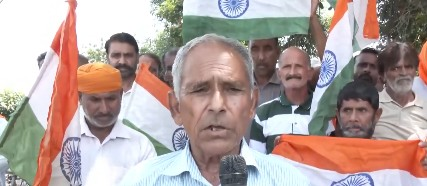
As the Union Territory observes seventh anniversary of Article 370 revocation on Wednesday, several local residents spoke to IANS, explaining the impact and implications of the move, its bearing on their lives and how this proved to be a turning point in shaping the Valley and its future.
Past seven years have seen unprecedented transformation in the region’s tourism index with militancy and terrorism registered a notable decline.
Today, the markets are buzzing with activity, streets filled with students and traders while cinema halls and multiplexes re-opening in the Valley, for the first time.
Many locals shared with IANS, the impact on their livelihood, Valley’s future and also what it means for the youth population there.
Vimal Mehra, a local youth, said that today, tourists are thronging Lal Chowk in Srinagar, hoisting the National Flag, and clicking pictures and making reels with their families and friends.
He also recounted the horrific scenes when Pakistani flags were frequently flaunted at the same famed spot.
He credited Prime Minister Narendra Modi and Union Home Minister Amit Shah for the ‘historic’ change in city’s outlook and demeanour.
Another youth Deepak Singh said, “due to separatists, ordinary people in Jammu and Kashmir suffered from shutdowns, strikes and curfews but after the abrogation of Article 370, the business of such an ideology has come to an end.”
He also criticised the separatist leaders, alleging that their children study abroad but the youth of Valley are pushed towards terrorism.
Arun Gupta, Chamber of Commerce Jammu President, shared his insights and applauded the administration over decline in terror incidents in the past few years.
“Jammu and Kashmir has witnessed significant changes after August 5, 2019. Today, trains are reaching the Valley, tourism is growing and development work is taking place,” he said while expressing concern over recent incidents.
Purshotam Dadhichi, Shri Sanatan Dharma Sabha Jammu and Kashmir President, told IANS that the biggest change after Article 370 abrogation is the sense of peace visible across the Union Territory.
“Tourists from different parts of the country and pilgrims visiting religious destinations such as Vaishno Devi now feel safer than before,” he added.
He also said that the Gorkha community, Valmiki community and people displaced from Pakistan-occupied Jammu and Kashmir (PoJK) were deprived of political and employment rights for a long time but in the post-370 era, their lives have undergone a tremendous change.
“They can now participate in the electoral process, and political parties are approaching them to seek their votes,” he added.
–IANS
mr/khz
