
Biodiversity authority releases Rs 8.22 crore to rice research institutions, rice-growing states

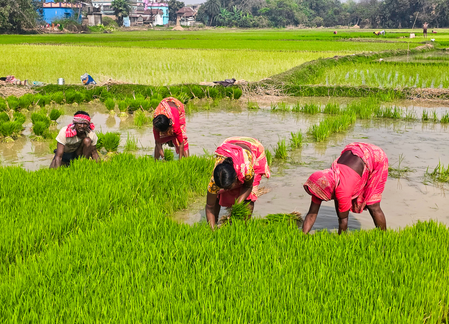
New Delhi, Aug 2 (IANS) The National Biodiversity Authority (NBA) has released Rs 8.22 crore to three institutions and 33 State Biodiversity Boards as access and benefit-sharing (ABS) disbursement for rice, an official said on Sunday.
The release of funds marks one of the largest single access and benefit-sharing (ABS) disbursements for rice, the official added.
The amount was received from Pioneer Overseas Corporation, an international seed company, for using Indian rice (Oryza sativa) varieties to develop and commercialise hybrids, the official said in a statement.
The research institutions will utilise the funds to strengthen germplasm conservation, maintain seed collections and support research and training, it added.
The disbursement reflects India’s commitment to ensuring fair and equitable sharing of benefits arising from the utilisation of the country’s biological resources, it said.
The NBA is a statutory body established under the Biological Diversity Act, 2002, under the Ministry of Environment, Forest and Climate Change.
It regulates access to India’s biological resources and associated traditional knowledge and implements the Nagoya Protocol’s principle of fair and equitable benefit-sharing.
The NBA has so far received about Rs 83 crore in ABS payments from the agriculture and seed sector alone. Across all sectors, its total ABS disbursements have crossed Rs 162 crore.
Of the total amount of Rs 8.22 crore released by the NBA to three research institutions, Rs 2.47 crore has been released to research institutions that conserved and shared the rice varieties with the company.
ICAR-Indian Institute of Rice Research at Hyderabad, has received the largest share of Rs 2.43 crore, while Govind Ballabh Pant University of Agriculture and Technology at Uttarakhand, has received Rs 3.26 lakh for the specific rice variety it contributed, the statement said.
An amount of Rs 5.75 crore has been released to 33 State Biodiversity Boards and Union Territory Biodiversity Councils based on the rice-growing area of each state and Union Territory, as listed in the Unified Portal for Agricultural Statistics of the Ministry of Agriculture and Farmers Welfare, it added.
Uttar Pradesh received the highest share of more than Rs 73 lakh, followed by West Bengal with over 64 crore and Telangana with over Rs 50 crore.
States and Union Territories with smaller rice-growing areas, such as Sikkim and the Andaman and Nicobar Islands, have also received proportionate allocations, it said.
The State Biodiversity Boards and Union Territory Biodiversity Councils will use their allocations for approved conservation activities, including protection of native crop diversity, ecosystem restoration, documentation of traditional knowledge, and support for local farmers and knowledge holders.
–IANS
rch/khz