
China to likely slow pace of investments in Pakistan if current security situation continues: Report

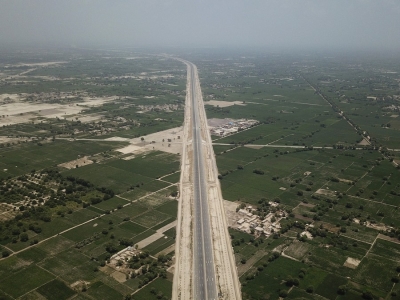
Islamabad, July 29 (IANS) China is likely to take a more cautious stance by slowing the pace of new investments, analysing existing projects and demanding stronger security guarantees before announcing new additional resources in Pakistan if the current security situation continues in Balochistan, a report has detailed.
China sees Pakistan’s Balochistan as a place where it can make massive investments, since it forms an important part of the Belt and Road Initiative (BRI). Beijing has invested USD 65 billion in the China–Pakistan Economic Corridor (CPEC), with funds announced for infrastructure development, energy generation and mineral extraction. However, Balochistan has also witnessed a rise in militant violence, with Chinese projects being attacked frequently, straining ties between Pakistan and China, a report in Radio Free Europe Radio Liberty detailed.
China has repeatedly expressed its concerns with Pakistan regarding the safety and security of its personnel as well as investment projects in Pakistan. The Balochistan Liberation Army (BLA) has conducted more than 100 attacks targeting foreign investment projects, police, military and paramilitary personnel in Balochistan in the first six months of 2026. Baloch rebels have accused Pakistan of exploiting natural resources of Balochistan.
Balochistan has remained Pakistan’s most underdeveloped and impoverished region despite being the largest province by area and located in proximity to the Strait of Hormuz through Gwadar Port and land borders with Iran and Afghanistan.
“The recent uptick in militant violence is a serious cause of concern for China, a country that has invested billions of dollars in Pakistan since 2015. The BLA in recent years has turned its sights on the Chinese, accusing them of exploiting their resources,” the report highlighted.
The Gwadar Port of Balochistan is called the crown jewel of CPEC as it includes the development of the deep seaport, Pakistan’s largest airport, economic zones, roads and public infrastructure. Gwadar, once seen as a place that would become Pakistan’s Dubai, has now become a no-go zone due to the current security situation.
“CPEC has lost much of its initial momentum,” Radio Free Europe Radio Liberty quoted Islamabad-based analyst Khalid Sultan as saying. According to him, attracting fresh foreign investment in Balochistan is challenging amid the current security environment.
“If the current security environment persists, China is likely to adopt a more cautious approach by slowing the pace of new investments, reassessing existing projects, and demanding stronger security guarantees before committing additional resources,” the report quoted Sultan as saying.
Recently, Baloch armed fighters launched a series of attacks targeting Pakistani forces and installations across multiple districts of Balochistan, leaving several personnel dead. The fighters also seized and torched multiple vehicles transporting minerals, after opening fire on a convoy in the Nokchah area of Chagai district.
The incident came against the backdrop of an “economic blockade” declared by the Baloch Liberation Army (BLA). Since the announcement, the group has established control over major highways across Balochistan, with reports indicating that over 200 vehicles have been set ablaze, The Balochistan Post reported.
In a separate incident, a large Pakistani military convoy heading to Noshki city was attacked on the N-40 highway near the Killi Batto area. The convoy included bulletproof vehicles and was accompanied by police personnel.
Reports suggest Pakistani security personnel were killed in the attack, although the number could not be confirmed. A police vehicle assigned to the Deputy Commissioner was struck, but the official reportedly escaped without injury.
–IANS
akl/as