SC to closely monitor Centre’s road map for NEET reforms; seeks detailed affidavit

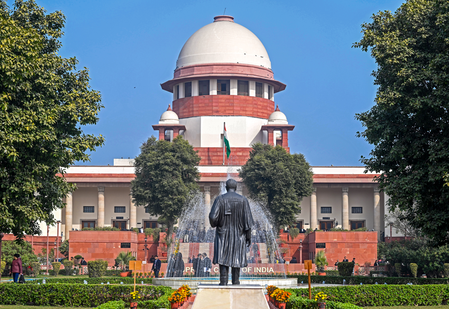
New Delhi, July 24 (IANS) The Supreme Court on Friday said it would “very closely monitor” the Centre’s road map for institutional reforms in the National Testing Agency (NTA) and measures to prevent future paper leaks, while directing the Union government to file a comprehensive affidavit detailing its proposals, including the feasibility of shifting NEET to a computer-based testing (CBT) mode, cybersecurity safeguards and examination security protocols.
A Bench of Justices P.S. Narasimha and Alok Aradhe, hearing a batch of petitions seeking structural reforms in the conduct of the NEET-UG examination following the alleged 2026 paper leak controversy, posted the matter for further hearing on July 27 after Solicitor General Tushar Mehta sought a few days’ time to present a “holistic view” of the reforms being undertaken.
Appearing for the Centre, SG Mehta submitted that there had been “some development” and requested that the matter be taken up after a few days so that the government could place a comprehensive picture before the top court.
However, the Justice Narasimha-led Bench said the proposed affidavit must specifically address the institutional reforms required to strengthen the examination system.
Referring to the recommendations of the high-powered committee headed by former ISRO Chairman K. Radhakrishnan, the Supreme Court said the government should indicate the proposed structure of the NTA’s governing board, how transparency and stakeholder participation would be ensured, and the manner in which domain experts, including institutions such as the IITs, would be involved in improving the examination framework.
In response, SG Mehta said the Centre would place on record the entire process, “right from the printing press till the time the student gets the paper”.
“For children there cannot be any adversarial response. The Radhakrishnan Committee has been fully accepted,” the Centre’s second highest law officer said, adding that the government was “going ten extra miles” to address students’ concerns and that the entire exercise was being supervised at the highest executive level.
During the hearing, the Supreme Court observed that reliance on temporary arrangements could not become a permanent solution.
“You deployed the Air Force, but that is ad hoc,” the Justice Narasimha-led Bench said, adding that “ad hocism has troubled us for years.”
The apex court also asked the Centre to explain whether NEET could eventually transition to a fully CBT model and the cybersecurity architecture that would be required to secure such a system.
“Give information regarding computer-based testing. Can it be shifted? How can the data be kept safe? If you digitise it, how will you secure it? Who will handle cybersecurity?” the Justice Narasimha-led Bench said, directing the Centre to specifically address these aspects in its affidavit.
Assuring the top court, SG Mehta said the Centre was open to every constructive suggestion. “Any suggestion from the court, we will take it without reservation,” he submitted.
“We will very closely monitor this. We will follow it up throughout the year. We will see that complete and total institutionalisation takes place. We can’t let this continue,” the Supreme Court observed while listing the matter for July 27, when the Centre is expected to file its detailed affidavit.
The batch of petitions seeks structural reforms in the conduct of NEET-UG, including a transition to CBT, greater statutory accountability of the NTA, implementation of stronger technological safeguards, and measures to prevent recurring paper leaks.
Earlier, while hearing the matter, the Supreme Court had observed that repeated controversies surrounding the examination highlighted the need to fix individual accountability within the NTA, saying the problem would continue unless specific responsibility was assigned to those handling various aspects of the examination process.
It had also remarked that examination bodies should not function in an ad hoc manner and had asked the Centre to place a comprehensive road map for strengthening the NTA’s organisational and human resource capacity.
The hearing comes a day after Prime Minister Narendra Modi announced that the Centre has prepared a comprehensive draft Bill to introduce stricter provisions and stringent punishments for paper leak cases.
The proposed legislation, expected to be discussed by the Union Cabinet and introduced in Parliament next week, envisages harsher penalties, fast-track special courts for time-bound trials and stronger institutional accountability.
The government has also initiated the process of establishing fast-track courts to deal with paper leak cases under the Public Examinations (Prevention of Unfair Means) Act, 2024, with NEET-related cases among those proposed to be heard on priority to strengthen deterrence against examination malpractices.
–IANS
pds/rad