EU urged to suspend Pakistan’s GSP Plus status over human rights abuses in Balochistan

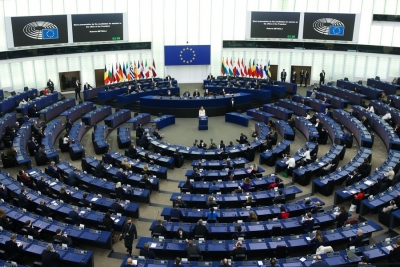
Quetta, July 23 (IANS) A leading human rights organisation has submitted a petition to the European Parliament seeking the suspension of Pakistan’s Generalised Scheme of Preferences Plus (GSP Plus) status, citing systematic violence by Pakistani authorities, judicial weaponisation, and grave violations of core EU trade and human rights conventions in Balochistan.
The petition was submitted by Paank, the human rights department of the Baloch National Movement (BNM), alongside a comprehensive, well-documented supplementary evidence report to the European Parliament.
“Over the past several years, the human rights situation in Balochistan has deteriorated from a regional crisis into an institutionalised, state-sponsored campaign of repression against the Baloch people. This campaign is fundamentally incompatible with the 27 international conventions that form the legal prerequisite for GSP plus trade privileges,” read the petition.
The Paank report also documented “clear, chronological escalation of state violence”, alleging that a decades-old covert “kill-and-dump” policy has evolved into the overt criminalisation of peaceful civil society. It alleged that the state apparatus has weaponised counter-terrorism legislation to “arbitrarily detain, torture, and silence” human rights defenders.
“The June 2026 life imprisonment of Baloch Yakjehti Committee (BYC) leaders Mahrang Baloch and Sibghatullah Shah, following closed-door trials stripped of due process, represents a critical turning point. Similarly, the relentless harassment, travel bans, and violent home raids directed at free activists like Sammi Deen Baloch demonstrate a systematic effort to eradicate all forms of peaceful dissent,” the rights body added.
Highlighting the escalating human rights abuses in Balochistan, Paank stated that the contemporary crisis is rooted in the systematic practice of enforced disappearances, allegedly carried out by Pakistani state security forces, including the Frontier Corps, intelligence agencies, and the Counter-Terrorism Department, to suppress political, social, and economic dissent.
“For over two decades, thousands of Baloch students, political activists, journalists, poets, and civilians have been abducted. The modus operandi is disturbingly consistent: individuals are taken from their homes, university dormitories, or public streets by armed personnel, often arriving in unmarked vehicles. The state subsequently denies any knowledge of their whereabouts,” it stated.
The rights body further alleged that the victims are taken to unacknowledged “black sites”, where they are held incommunicado for months or even years. It added that testimonies from the few survivors recount horrific torture, with many cases allegedly ending in extrajudicial killings.
“Tragically, this practice is frequently coupled with extrajudicial executions, known locally and internationally as the ‘kill-and-dump’ policy. Mutilated bodies of the disappeared are frequently discovered in desolate mountainous areas, bearing undeniable signs of severe physical abuse, drill holes, and acid burns,” it mentioned.
Paank called on the European Commission to immediately launch an official investigation and initiate the procedure for the temporary withdrawal of Pakistan’s GSP+ trade preferences due to systematic violations of the International Covenant on Civil and Political Rights (ICCPR) and the Convention Against Torture (CAT) as stipulated under the GSP regulation.
It urged the European Parliament to formally request the United Nations Human Rights Council to establish an independent fact-finding mission to investigate extrajudicial killings, enforced disappearances, and the operation of secret detention centres in Balochistan.
–IANS
scor/ksk/as