

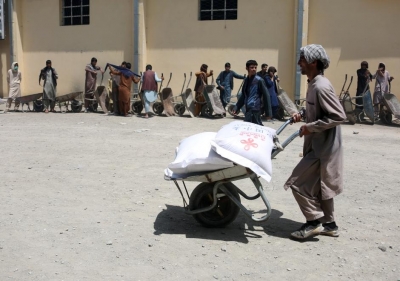
Kabul, July 18 (IANS) The humanitarian crisis in Afghanistan is worsening as aid agencies are scaling back food assistance due to severe international funding shortfalls, local media reported citing the United Nations and Human Rights Watch (HRW).
“The United Nations estimates that more than 17 million people in Afghanistan will face acute food insecurity this year, while about 22 million people require humanitarian assistance, including food, healthcare and protection services. Women, children, internally displaced people and returning refugees remain among the hardest hit,” Khama Press reported.
It noted that the UN’s 2026 Humanitarian Response Plan had received less than 20 per cent of the funding required by June. This has forced the humanitarian organisations to suspend or reduce food distributions and healthcare programmes, including some life-saving services.
According to HRW, the return of more than five million Afghan migrants from Pakistan and Iran has placed additional pressure on communities already struggling.
“Fereshta Abbasi, an Afghan researcher at Human Rights Watch, said deteriorating economic conditions are driving many families into extreme hardship. Drawing on interviews conducted across Afghanistan, she described parents unable to provide enough food for their children and households increasingly relying on neighbours for basic meals,” Khaama Press noted.
Over 10.7 million women and girls will need humanitarian assistance in Afghanistan in 2026, the United Nations Office for the Coordination of Humanitarian Affairs (OCHA) said in a report on Tuesday while warning that they remain among the most affected due to the country’s ongoing humanitarian crisis.
According to the OCHA’s latest update on Afghanistan, restrictions imposed on women’s movement, education and employment continue to limit their access to essential services, while increasing protection risks and deepening existing vulnerabilities. Afghanistan continues to have one of the world’s highest maternal mortality rates, with an estimated 638 maternal deaths per 100,000 live births in 2024.
The health sector in Afghanistan is also facing a significant strain. Shortage of women health workers, funding reductions, limited access to essential medicines and gaps in emergency obstetric care are contributing to preventable maternal and neonatal deaths, particularly in rural areas where access to healthcare remains limited, according to the OCHA.
–IANS
ksk/dan