
Lot to learn for Bangladesh from PM Modi’s landmark three-nation visit: Report

Dhaka, July 18 (IANS) India’s diplomatic outreach reflects the growing role of emerging powers in shaping the regional order rather than simply responding to the changing geopolitical realities.
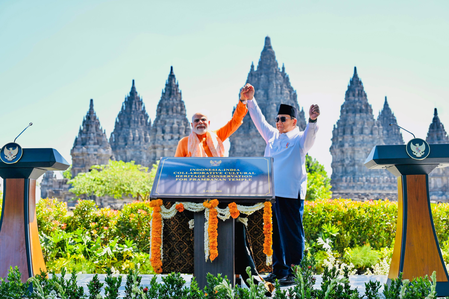
Prime Minister Narendra Modi’s recent six-day visit to Indonesia, Australia and New Zealand from July 6 to 11 was more than a series of high-level diplomatic engagements. It underscored India’s growing resolve to shape the strategic and economic landscape of the Indo-Pacific amid an increasingly fragmented geopolitics, a report has stated.
For Bangladesh, the importance of the visit lies not in the destinations themselves, but in the implications of India’s evolving regional strategy for its closest neighbours, a report in Bangladeshi newspaper ‘Daily Sun’ highlighted.
“The Indo-Pacific has become the principal theatre where economics, security and technology increasingly intersect. Competition between the United States and China continues to reshape global supply chains, maritime security arrangements and access to critical resources. Rather than positioning itself as merely a participant in this rivalry, India appears intent on becoming one of the region’s principal agenda-setters,” the report detailed.
“That ambition was evident throughout the tour. Discussions with Indonesia centred on maritime cooperation, defence ties and critical minerals. Australia remained a key partner in energy security, critical minerals and negotiations towards a Comprehensive Economic Cooperation Agreement. New Zealand added another dimension by strengthening economic engagement and broadening cooperation in agriculture, education and innovation,” it added.
The report noted that these three visits by PM Modi collectively reinforced India’s ‘Act East’ policy while advancing the vision of a free, open and rules-based Indo-Pacific.
“For Bangladesh, these developments should not be viewed through the narrow prism of India’s bilateral diplomacy. They raise broader questions about how the region itself is changing and where Dhaka intends to position itself within that transformation,” it added.
According to the report, instead of viewing India’s economic strategy through the lens of competition, Bangladesh could see it as an opportunity to strengthen industrial cooperation, attract technology investment and improve its integration into regional value chains.
It added that Bangladesh’s engagement with India has long centred on land borders, connectivity and river-water sharing. Although these areas continue to be significant, the strategic focus is gradually shifting towards the Bay of Bengal.
“India’s growing emphasis on maritime domain awareness, port connectivity and secure sea lanes reflects a wider recognition that economic prosperity increasingly depends on the oceans. Bangladesh, with its strategic coastline and expanding blue economy ambitions, occupies a central location within this evolving geography,” the report mentioned
“This convergence presents opportunities rather than dilemmas. Improved maritime cooperation could strengthen disaster response, fisheries management, marine scientific research, port efficiency and the security of vital shipping routes that carry much of South Asia’s trade. The Bay of Bengal should no longer be viewed simply as a shared body of water but as a shared economic space,” it noted.
–IANS
scor/as