

Thiruvananthapuram, July 1 (IANS) The Kerala Assembly on Wednesday passed the Finance Bill, including the contentious revision of the tax structure for low-alcohol beverages, after a stormy debate that ended with the Opposition walking out and boycotting the voting.
The Bill, incorporating the government’s official amendments, was passed by voice vote in the absence of Opposition members, who protested what they described as the government’s attempt to push through a major policy change without adequate legislative scrutiny.
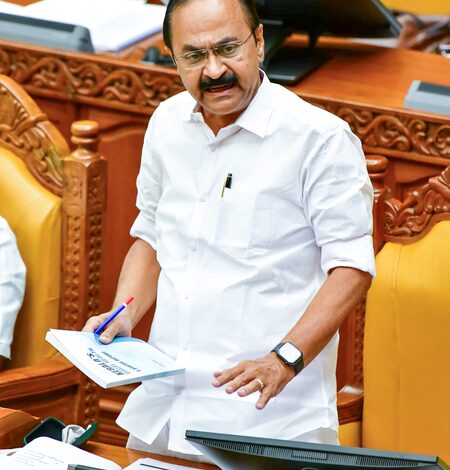
The revised tax structure for low-alcohol beverages dominated the debate, with Chief Minister V.D. Satheesan and Leader of the Opposition Pinarayi Vijayan engaging in a sharp exchange over both the legislative process and the government’s liquor policy.
Pinarayi alleged that the reduction in tax on low-alcohol beverages had been smuggled into the Finance Bill rather than being transparently debated as part of the Budget.
Rejecting the charges, Satheesan said the tax proposal had been explicitly announced in his Budget speech and reminded the House that all taxation proposals contained in the Budget are necessarily incorporated into the Finance Bill.
He remarked that it was surprising for a former Chief Minister to suggest otherwise, adding that the Opposition had staged a walkout to avoid hearing his detailed explanation.
The Chief Minister also accused both the Opposition and ‘certain others’ of attempting to undermine the Budget through a politically motivated campaign, asserting that his government would not retreat from policy decisions under pressure.
Seeking to rebut the allegation that the revised policy favoured liquor companies, Satheesan questioned why discussions had been held with multinational liquor manufacturer Bacardi if the issue was genuinely about protecting farmers.
He also tabled official records from the previous Left government, stating that files initiated in November 2021 showed that the then administration had itself examined measures to promote lower-alcohol beverages as part of a strategy to reduce dependence on hard liquor.
According to the Chief Minister, both the A.P. Udayabhanu Commission and the Justice Ramachandran Committee had recommended encouraging the availability of beverages with lower alcohol content.
He also pointed out that former Excise Minister M.V. Govindan (present CPI-M state secretary) had approved a draft amendment, which was later referred to the Subject Committee.
Explaining the revised tax structure, Satheesan said the government had created a separate category for beverages containing between 0.5 and 20 per cent alcohol, attracting tax ranging from 120 to 175 per cent, which he described as among the highest in South India and substantially higher than the rates applicable to beer and wine.
He said the policy was consistent with global recommendations encouraging a shift from hard liquor to beverages with lower alcohol content and cited Karnataka’s tax restructuring as an example.
At the same time, he stressed that the sale of such beverages remained a policy decision of the government. “If the government decides not to permit them, they will not be sold in Kerala,” he said, noting that the Kerala State Beverages Corporation’s wholesale monopoly ensured complete control over procurement and distribution.
Maintaining that the controversy had been exaggerated to overshadow the Budget, the Chief Minister said the government was proceeding with a clear policy framework even as the passage of the Finance Bill brought one of the Assembly’s most acrimonious debates this session to a close.
–IANS
sg/pgh