
Pakistan: Rights body raises health, safety concerns as BYC leaders continue Quetta jail protest

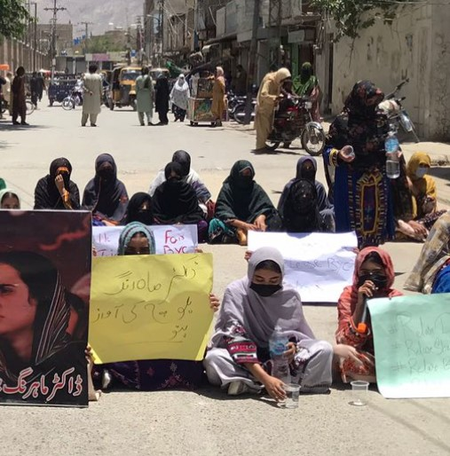
Quetta, June 22 (IANS) As the sit-in protest by leaders of the human rights body Baloch Yakjehti Committee (BYC) inside Huda jail in Balochistan’s Quetta, continued, the BYC expressed grave concern over the health and safety of all the detained leaders, saying they were enduring harsh conditions while seeking the protection of their “constitutional and legal rights.”
According to the BYC, the sit-in protest by BYC leaders, including Mahrang Baloch, Bebarg Baloch, Shah Jee Baloch, Beebow Baloch, and Gulzadi Baloch, against “unfair judicial proceedings and faceless trials” entered its ninth consecutive day on Sunday.
“The detained BYC leaders launched this protest against the faceless trials and the continued denial of their fundamental legal rights. Despite their clear rejection of these proceedings and the lawyers appointed on their behalf, court proceedings have continued without their consent, while state-appointed lawyers have been imposed upon them against their wishes,” the BYC posted on X.
“Faceless trials not only violate the principles of transparent justice but also deprive detainees of their fundamental right to defend themselves. When families are denied access to meet their loved ones and judicial proceedings are conducted away from public scrutiny, concerns regarding fairness and due process become even more serious,” it stressed.
The BYC alleged that Mahrang Baloch and the other detained BYC leaders have continued their protest for the past nine days under extreme weather conditions and without basic facilities, enduring the scorching heat. Through this peaceful protest, it said, they are demanding “transparent and fair trials and the restoration of their legal rights.”
In a statement issued from Huda Jail in Quetta and posted on her social media platform X on Sunday, Mahrang said, “On June 13, when we were taken to the jail superintendent’s room for our court appearance, we learned there that our cases were being transferred to a faceless trial. Against this decision, we immediately protested and refused to return to our barracks. Since then, we have been continuing our peaceful sit-in within the jail premises.”
“This sit-in has revived countless memories of our resistance struggle. Be it cold or heat, state violence or restrictions, we have always strived to stand with our people in every difficult time. All those faces who remained steadfast despite enforced disappearances, murders, oppression, and continuous state violence are still alive in our memories today,” she added.
She stated that the sit-in has two basic demands: first, that the cases be heard in an open court; and secondly, Judge Muhammad Ali Mubeen of Pakistan’s Anti-Terrorism Court be transferred.
Raising alarm over the “faceless trials,” Mahrang said, “When, instead of transparent hearings of cases, such procedures are adopted that further restrict the accused and their lawyers, the claims of delivering justice lose their meaning.”
“Recent amendments to the Anti-Terrorism Act have made the situation even more alarming. Under the changes approved by the Balochistan Assembly, any individual can be imprisoned for extended periods merely on the basis of suspicion,” she added.
–IANS
scor/rs