Sela Tunnel transformed Tawang connectivity, symbolises Northeast’s infrastructure revolution: Arunachal Dy CM

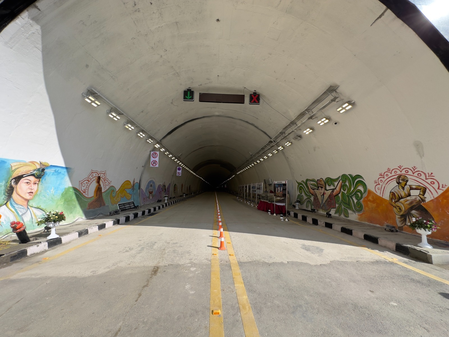
Itanagar, June 20 (IANS) The Sela Tunnel in Arunachal Pradesh has revolutionised connectivity to Tawang by providing all-weather access, enhancing mobility, strengthening strategic infrastructure, and creating new opportunities for growth and development in the region, the state’s Deputy Chief Minister Chowna Mein said on Saturday.
The Sela Tunnel, inaugurated by Prime Minister Narendra Modi on March 9, 2024, is the world’s longest bi-lane tunnel at an altitude of 13,000 feet.
Comprising two tunnels and a link road, it provides all-weather connectivity to the Tawang region in northwestern Arunachal Pradesh, located near the tri-junction of India, China (Tibet), and Bhutan.
In a series of posts on social media platform X, the Deputy Chief Minister highlighted the significance of the Sela Tunnel, saying it has transformed the region by ensuring safer transit throughout the year and improving the mobility of the armed forces.
Mein, who also holds the Power and Non-Conventional Energy Resources portfolios, said: “A route once disrupted by heavy snowfall is now accessible throughout the year.”
“The Sela Tunnel has revolutionised connectivity to Tawang, providing all-weather access, enhancing mobility, strengthening strategic infrastructure, and creating new opportunities for growth and development in the region,” he added.
He said that the tunnel, executed by the Border Roads Organisation (BRO), is part of a broader infrastructure push that has strengthened connectivity across the Northeast.
Improved roads, upgraded railway stations, and modern infrastructure are bringing the region closer than ever before.
“This improved accessibility is fostering economic opportunities, boosting tourism, and accelerating development across the region,” Mein said.
Recalling the challenges of the past, the Deputy Chief Minister noted that connectivity had long remained one of the biggest obstacles across much of the Northeast.
“Today, soaring bridges, expanding railway networks, and world-class infrastructure are bringing communities closer and creating new avenues for growth,” he said.
“Over the past 12 years, the region has undergone a historic transformation, laying the foundation for a more connected, prosperous, and vibrant Northeast,” he pointed out.
According to Mein, the Northeast has redefined development over the past decade. Once known for its remoteness and infrastructural challenges, the region has emerged as a key pillar of India’s development story, supported by improved connectivity, modern infrastructure, peace, digital empowerment, healthcare facilities, and expanding economic opportunities.
“Roads, railways, air links, waterways, and welfare schemes have infused new momentum into the Northeast. This is not just development, but a transformative journey of trust, participation, and prosperity. A Changing Northeast, A Rising India,” he stated.
Highlighting the Prime Minister’s sustained focus and efforts on the region, the Deputy Chief Minister said that for Modi, the Northeast has always been an integral part of India’s aspirations and progress.
“Over the past 12 years, sustained attention, unprecedented investment, and people-centric policies have helped unlock the region’s immense potential, bringing it closer to the heart of India’s development journey,” Mein said.
“Today, the Northeast stands as a symbol of confidence, cultural pride, and economic dynamism. With its rich heritage gaining wider recognition and its growing contribution to national growth, the region is shaping a new chapter in India’s rise,” he added.
Mein, who also holds the Finance, Planning and Investment portfolios, said: “With over 96 per cent railway electrification, 100 per cent household electrification, eight new Greenfield airports, significant railway expansion, and enhanced connectivity across the region, the foundations of growth have been strengthened like never before.”
The Deputy Chief Minister further said that broad-gauge railway connectivity has expanded significantly across the region, while Arunachal Pradesh, Meghalaya, Nagaland, Tripura and Mizoram have achieved 100 per cent rail electrification.
Since 2014, more than 1,500 km of railway tracks have been laid in the Northeast, with investments exceeding Rs 95,000 crore in the railway sector, he pointed out. Vande Bharat trains are now operational in Assam, while over 60 railway stations across the region are being modernised under the Amrit Bharat Station Scheme. He said that these achievements reflect the Centre’s commitment to transforming the Northeast into a major growth engine of the country through enhanced connectivity, infrastructure development and inclusive progress.
–IANS
sc/rad