
New Delhi, June 18 (IANS) The West Bengal Assembly Budget Session commenced on Thursday with the inaugural address of Governor R.N. Ravi, marking a countdown to the maiden presentation under a Bharatiya Janata Party (BJP) government in the state.
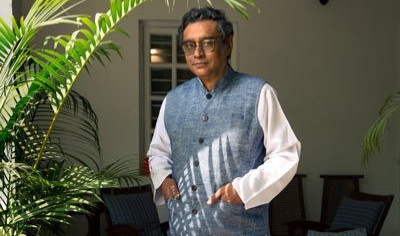
The man of the moment may well be Swapan Dasgupta — a seasoned journalist, commentator, and Parliamentarian, now the state Finance Minister — who would be delivering the budget speech on June 22.
Known for his sharp intellect and deep understanding of policy, Dasgupta is expected to bring a blend of pragmatism and ideological clarity to the budget.
His background in national politics and economic commentaries put him in a place where he may understand both the macroeconomic imperatives and the micro-level concerns of the state’s economy. He could turn out to be the “man of the moment” because he will voice the Chief Minister Suvendu Adhikari-led administration’s attempt to project competence and credibility in governance.
If the new Finance Minister can present a budget that balances fiscal discipline with growth-oriented measures, while also addressing the aspirations of common Bengalis, it would mark a turning point in the state’s eco-politics.
For about half-a-century, the state’s fiscal policy was shaped by either the Left Front or the Trinamool Congress, who have incessantly blamed the Union governments of the past for ignoring the state.
Now, with a “double-engine” government in place, expectations are running high across social strata — from the common man to industrialists — about whether this budget will mark a genuine break from the past.
Dasgupta’s job will be under scrutiny, where for decades, West Bengal has been facing economic challenges. Its economy has long been burdened by structural issues. Unemployment, infrastructure bottlenecks, lack of adequate support facilities, and delays in port modernisation and connectivity have allegedly slowed investment.
The state’s debt burden is considered another pressing concern, with successive governments relying heavily on borrowing to fund welfare schemes.
Agriculture, though still a mainstay, suffers from below-potential productivity and lack of modern irrigation facilities.
Meanwhile, the manufacturing sector has struggled to regain its footing after decades of lacking significant investment and flight of industries.
The common man’s requirement is loud and clear: relief from rising prices and better employment opportunities. Inflation in food and fuel has hit household budgets hard, and there is hope that the BJP government will announce subsidies or targeted welfare measures.
Improved healthcare and education facilities also rank high on the public wish list, especially in semi-urban and rural areas where state services remain patchy.
Businessmen and traders want simplification of tax structures and better logistics.
The trading community has long complained about bureaucratic hurdles and inconsistent enforcement of rules.
A budget that streamlines processes, reduces compliance costs, and improves transport infrastructure could win them over.
Industrialists are looking for bold signals. They want land acquisition policies that are transparent and investor-friendly, power tariffs that are competitive, and incentives for certain sectors.
The aim should be in keeping with what Prime Minister Narendra Modi has stressed, that a strong Bengal, along with Bihar and Odisha (Anga, Banga, Kalinga), is essential for India’s journey to be a developed nation.
The emphasis on the region’s strategic importance reflects the belief that it has the potential to be a gateway to Southeast Asia. That will depend if the state government can create a stable and predictable investment climate.
For the new Chief Minister Suvendu Adhikari, this budget will also mean delivering a political statement. Having dethroned Mamata Banerjee’s Trinamool Congress, his administration must prove it can govern effectively and deliver growth.
The budget will be under scrutiny beyond its allocations and deficits; it will also be about the government’s intent. And that will be weighed on its need to prioritise infrastructure and investment, or leaning heavily on welfare; whether it will tackle debt head-on, or postpone the hard choices.
–IANS
jb/khz