
Latest spell of storms exposes gap between preparedness and response in Pakistan: Report

Islamabad, June 7 (IANS) The latest spell of storms in Pakistan, despite being predicted in advance have once again exposed the gap between preparedness and response. The recurrence of disruption under predictable conditions showcases a cycle that will continue to occur without meaningful intervention, a report has stated.
The National Disaster Management Authority (NDMA) had predicted the latest spell of rains and thunderstorms in advance and placed several regions on alert. Punjab, Khyber Pakhtunkhwa, Pakistan-occupied Kashmir and Pakistan-occupied Gilgit Baltistan were all classified as vulnerable zones between April 12 and 17. The warnings were issued timely and were district specific, yet the disruptions that followed showcases that only the presence of information cannot translate it into preparedness, according to the report in ETRUTH MV.
Vulnerable areas, including areas like Chitral and Swat and densely populated regions like Lahore and Rawalpindi, were identified well in advance. These predictions provide information about expected rainfall intensity, wind patterns, and potential hazards and allow authorities to mobilise resources, coordinate responses, and mitigate risks before they materialise. However, the recurring disruption in Pakistan caused by seasonal storms suggests that these opportunities are not being fully used. The agencies issue warning, but there is absence of timely and effective action, as per the report.
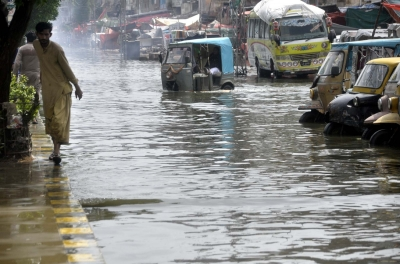
Even moderate rainfall can cause significant disruption in the major cities of Pakistan. Flooded streets, traffic jams, and power outages occur in Pakistan due to weather events that are neither extreme nor unexpected. The risks linked to storms are different but foreseeable for the northern and mountainous regions of Pakistan. Landslides, road blockades and temporary isolation of regions occur in Pakistan during periods of heavy rainfall.
“Pakistan’s experience with seasonal storms illustrates a broader challenge in governance: the ability to translate information into action. The forecasts are increasingly precise, the risks are well understood, and the institutional frameworks are in place. Yet the outcomes remain largely unchanged,” the report in ETruth MV stated.
“The latest spell of storms, despite being clearly anticipated, has once again exposed the gap between preparedness and response. The recurrence of disruption under predictable conditions highlights a cycle that continues without meaningful interruption. As the country moves through another season of weather-related challenges, the pattern remains consistent. Warnings are issued, impacts follow, and the underlying issues persist—unchanged, unaddressed, and increasingly difficult to ignore,” it added.
Earlier in May, at least two people were killed, and 11 others were injured in rain-related incidents in Pakistan’s Khyber Pakhtunkhwa as heavy rains and thunderstorms lashed parts of the province.
The Provincial Disaster Management Authority (PDMA) stated that fatalities were reported from Mardan in rain-related incidents, while injuries were reported in Battagram, Swat and Mardan, Pakistan’s daily The Express Tribune reported.
According to the PDMA report, four people were injured in Battagram, one in Mardan and six in Swat. Houses and infrastructure have also suffered damage due to severe weather conditions in several districts.
As per the report, three houses in Shangla and one house in Battagram were completely destroyed while another 27 houses suffered partial damage, including five in Torghar, two in Swat, one each in Upper Dir and Mardan, The Express Tribune reported. A school in Shangla also suffered damage due to adverse weather conditions.
–IANS
akl/uk