
Newly unearthed wartime records expose inner workings of Japan’s poison gas bomb factory

Tokyo, June 6 (IANS) Newly discovered historical records have shed fresh light on the operations of a Japanese poison gas bomb factory during World War II, revealing details of chemical weapons production, workplace accidents and the wartime mobilisation system that prioritised military expansion above all else.
The documents were recently uncovered by Seiya Matsuno, a historian and researcher at the International Peace Research Institute of Meiji Gakuin University, in Japan’s National Archives. Matsuno said the materials not only provide new evidence about Japan’s wartime production of poison gas munitions but also illustrate the dark reality of a government and military apparatus that placed war above society and human life.
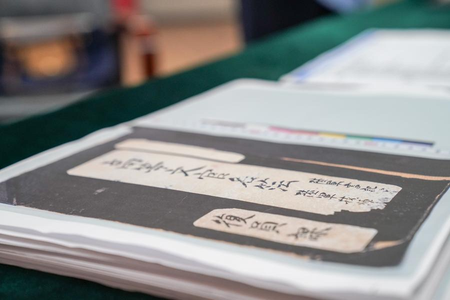
The newly found document, titled “Compilation of Reports on the Implementation of Military Mobilisation,” is a production report covering fiscal 1941 operations at the Sone Manufacturing Plant of the Tokyo Second Army Arsenal. Matsuno analysed the material and published his findings in the June 2026 issue of the Japanese magazine Sekai.
According to Matsuno’s research, the Sone plant, formerly located in Kitakyushu City in Fukuoka Prefecture, was responsible for filling artillery shells with toxic chemical agents and assembling poison gas bombs. The facility also manufactured smoke shells and incendiary bombs.
The material documents accidents that occurred during poison gas bomb production and the injuries suffered by workers. Until now, such incidents had largely been known only through testimonies from former employees. The newly discovered records provide documentary evidence supporting those accounts.
Matsuno told Xinhua that the material also shows how poison gas bomb production expanded alongside Japan’s growing war efforts. During fiscal 1941, the Sone plant increased its workforce and boosted output. He noted that, at the time, Japan was continuing its war in China, preparing for a possible conflict with the Soviet Union and planning military expansion into Southeast Asia.
Matsuno emphasised that the Japanese military’s use of chemical weapons in China and elsewhere violated international law, adding that the military also conducted human experiments and committed other war crimes, which reflected the brutal nature of Japan’s wartime aggression.
Under the rule of Japanese militarism, the country became increasingly consumed by war fervour. Matsuno said that the newly discovered records reveal a period in which the government and military subordinated all aspects of society to the war effort, while dissenting voices were systematically suppressed.
War brings only suffering and misfortune, Matsuno noted, stressing the importance of uncovering the realities of wartime history to prevent similar tragedies from recurring. Understanding how Japan became a country that inflicted serious harm on many Asian nations, and examining the conditions that made such developments possible, remain important tasks for contemporary Japanese society, he added.
–IANS
sd/