
India’s energy diplomacy builds autonomy through diversification, connectivity investments

New Delhi, June 4 (IANS) India has transformed its energy diplomacy from simple resource procurement into geopolitical hedging that preserves strategic autonomy through four interlocking pillars — supplier diversification, connectivity investment, financial engineering and energy‑transition diplomacy, a new report has said.
While the world wonders at how India simultaneously expanded energy ties with sanctioned Russia, and improved relations with Washington, New Delhi proved that “modern geopolitical influence operates through shaping the environment within which sovereign states make economic decisions”, the report from India Narrative said.
India sources crude and gas from over 40 countries, maintaining concurrent ties with sanctioned suppliers such as Russia while deepening partnerships with Gulf monarchies.
That approach “preserves competitive pricing tension among suppliers and denies any single power the leverage of indispensability,” the report said.
The report drew India’s approach in stark contrast with Europe’s approach that dismantled energy trade with Russia under political compulsion from the United States, absorbing severe industrial and inflationary costs.
Further, India’s approach also prioritised connectivity projects such as the International North‑South Transport Corridor (INSTC) and the India‑Middle East‑Europe Corridor (IMEC) aim to diversify trade routes and logistics nodes beyond the Strait of Hormuz.
Ports in Oman and the Caspian region offer alternative maritime access, the report noted.
India also focused on financial diversification with steps to reduce dollar dependence. The Reserve Bank of India has cleared a rupee‑rouble settlement pathway for large commodity trades.
Despite India being a $4-trillion economy with deep US investment and trade relationships, it demonstrated willingness to invest in SWIFT bypass infrastructure, raising the cost of financial coercion for Washington.
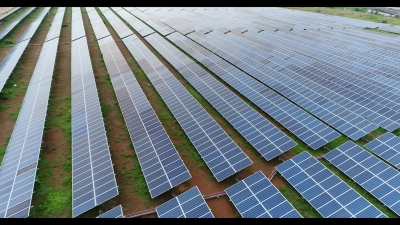
The government also focused on expansion of non‑fossil installed capacity which reached 283.46 GW by March 2026, marking over a threefold increase since 2014.
The report urged that India should formalise a Chabahar sanctions carve-out within the evolving US-India trade framework, positioning the corridor as essential to Indo-Pacific connectivity.
Strategic petroleum reserves should be expanded from 45 to 90 days of consumption coverage and a multi-currency Gulf energy settlement framework must be developed.
“The government should introduce formal demand mandates for green hydrogen procurement by public sector fertiliser and refinery consumers, providing the demand signal that IEEFA identifies as the primary barrier to project commissioning,” the report noted.
—IANS
aar/na