
India’s solar success could become blueprint for other emerging economies: Report

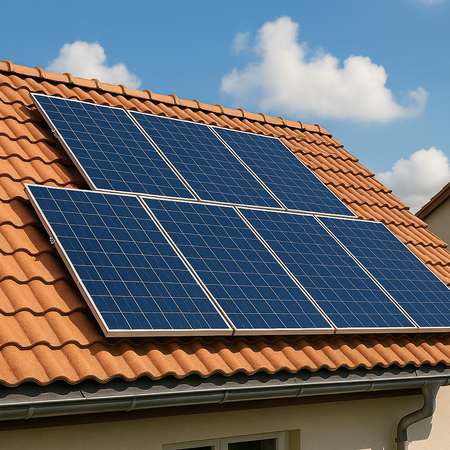
New Delhi, May 31 (IANS) A vast expanse of solar panels is rapidly transforming the white salt deserts of Gujarat’s Rann of Kutch into one of the world’s biggest renewable energy hubs, a report has said.
Spread across nearly 280 square miles near the India-Pakistan border, the Khavda solar park is expected to become the world’s largest solar power project by 2029.
Once completed, the site will host nearly 60 million solar panels and generate 30 gigawatts of electricity — enough to power an entire country the size of Austria, the report from Yale E360 cited by Grist stated.
The massive project reflects India’s accelerating push toward solar energy. The country’s installed solar capacity has been growing at around 40 percent annually and crossed 150 gigawatts in March.
By 2030, India is expected to double that capacity again as it seeks to meet soaring electricity demand while cutting reliance on fossil fuels.
Energy analysts believe India could become the first major economy to industrialize primarily using solar power instead of coal.
According to Kingsmill Bond, energy strategist at U.K.-based think tank Ember, India is taking a different path from China and Western nations, which built their economies largely on fossil fuels.
“China built on coal; India is building on sun,” Bond said, adding that India’s model could inspire other emerging economies seeking rapid growth without sharply increasing carbon emissions.
India’s rapid solar expansion marks a dramatic shift from its position just a decade ago, when solar power played only a limited role in the country’s energy mix.
At the time, the government strongly backed coal production to support industrial growth, despite growing global concerns over climate change, the report stated.
Soon after coming to power in 2014, Prime Minister Narendra Modi had pledged to double coal output by 2020.
India also resisted international pressure at climate summits to phase out coal, arguing that developing nations still needed fossil fuels to reduce poverty and expand their economies.
However, falling solar panel prices and India’s naturally sunny climate gradually altered the country’s energy strategy.
Since the COP26 climate summit in Glasgow, the pace of solar installations has accelerated sharply.
Last year, non-fossil fuel sources accounted for more than half of India’s installed power generation capacity for the first time, the report stated.
According to the International Energy Agency (IEA), nearly half of India’s additional electricity demand between now and 2030 is expected to be met through solar energy.
Another quarter is likely to come from other low-carbon sources including wind, hydroelectric and nuclear power, the report said.
–IANS
pk