
Below-normal southwest monsoon likely; IMD forecasts deficient rainfall across India

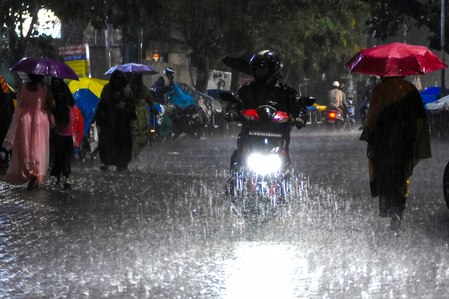
New Delhi, May 29 (IANS) The India Meteorological Department (IMD) has released its updated long-range forecast for the 2026 southwest monsoon, indicating a higher probability of below-normal rainfall across the country.
According to the seasonal outlook for June to September, the total rainfall is expected to be around 90 per cent of the Long Period Average (LPA), with a model error margin of plus-minus 4 per cent. This places the overall monsoon in the below-normal category, raising concerns for agriculture, water resources, and the economy.
The forecast suggests that 2026 could witness one of the weaker monsoon seasons in recent years.
The monsoon core zone, which includes a large portion of rain-fed agricultural areas critical for the country’s food production, is also likely to receive below-normal rainfall.
While Northeast India is expected to get normal rainfall, Northwest India, Central India, and South Peninsular India are projected to experience deficient rains.
Some isolated pockets in Northwest and Northeast India, eastern parts of South Peninsular India, and scattered areas in East India may, however, receive normal to above-normal rainfall.
For the month of June 2026 alone, the IMD has predicted below-normal rainfall over most parts of the country.
Above-normal maximum and minimum temperatures are likely to prevail across large parts of India during June, with an increased number of heatwave days expected in several states, including Uttar Pradesh, Haryana, Punjab, Bihar, Odisha, Chhattisgarh, Gujarat, and Andhra Pradesh. However, Rajasthan and Jharkhand may see fewer heatwave days than normal.
The forecast is influenced by the developing El Niño conditions in the equatorial Pacific Ocean, which are known to suppress monsoon activity.
The Indian Ocean Dipole is currently neutral and is expected to remain so during the monsoon season.
IMD has assigned an 84 per cent probability to the below-normal rainfall scenario for the entire season. This early indication of a deficient monsoon is significant as it comes at a time when many parts of the country are still recovering from the impact of previous weather anomalies.
A weak monsoon could lead to challenges in water availability, reduced crop yields, and increased pressure on groundwater resources. It may also affect hydroelectric power generation and drinking water supply in several regions.
The IMD will issue a more detailed forecast for July towards the end of June.
In the meantime, state governments and farmers have been advised to prepare contingency plans, including efficient water management, adoption of drought-resistant crop varieties, and enhanced water conservation measures.
–IANS
sktr/dpb