Pakistan trying to achieve global status ignoring problems at home: Report

Islamabad, May 24 (IANS) Despite Pakistan’s efforts in seeking global relevance by turning into a peacemaker in the US-Iran conflict, its domestic economic crisis, internal conflicts surrounding Balochistan. and cross-border skirmishes with India and Afghanistan are among the issues that have consistently concerned the nation, a Bangladeshi media report said.
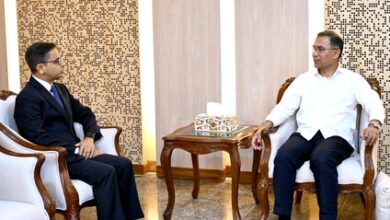
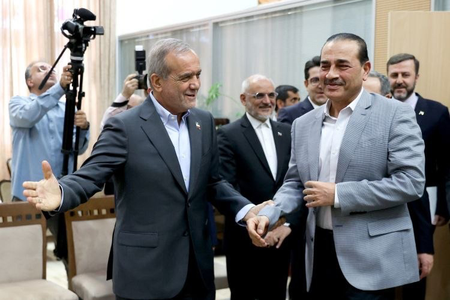
The critique came after a Pakistani delegation, including Army chief Field Marshal Asim Munir and Interior Minister Mohsin Naqvi, visited Iran on Friday to push for an end to the ongoing conflict between Washington and Tehran.
“Keeping Pakistan’s economy operational without loans from the IMF has become nearly impossible. Foreign exchange reserves have repeatedly plummeted to levels where even meeting import costs has become a matter of grave concern,” Tanjina Aman Tanjum wrote in an editorial in the Dhaka Tribune.
“Fuel shortages, rising electricity tariffs, and soaring prices of daily necessities have rendered the lives of ordinary citizens unbearable. Middle-class families are now compelled to cut back on daily expenses, small businesses are struggling to survive, and a significant segment of the youth is increasingly eager to migrate abroad,” it added.
Moreover, TTanjum noted that border skirmishes, terrorism, and conflicts surrounding the Taliban have kept relations between Pakistan and Afghanistan in a state of “perpetual instability”.
Highlighting the neighbouring country’s “conflict-ridden” relationship with India, the editorial stated: “The Kashmir issue, border clashes, and political tensions have consistently kept relations between the two nations on edge. On several occasions, situations have arisen where the spectre of a nuclear conflict loomed large.”
Further, the Tehreek-i-Taliban Pakistan (TTP) and Balochistan Liberation Army (BLA) have repeatedly carried out major attacks on Pakistani soil.
However, the editorial states that Pakistan has its own vested interest in mediating between the US and Iran.
“Should the conflict in the Middle East become protracted, oil prices would inevitably rise – a scenario that would plunge Pakistan’s already fragile economy into an even deeper crisis. Furthermore, given Pakistan’s large Shia population, instability surrounding Iran could trigger sectarian tensions within the country,” Tanjum stressed.
–IANS
cg/vd