
Pakistan lacks deep ‘structural reforms’, stares at acute financial crisis

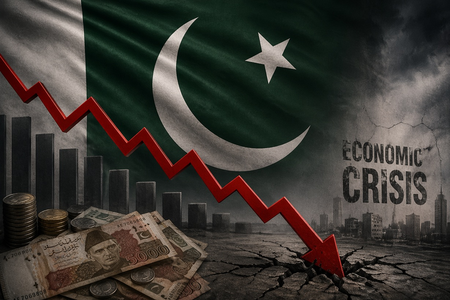
New Delhi, May 23 (IANS) Pakistan’s external sector has once again exposed the economy’s structural weaknesses amid the ongoing Middle East crisis, according to a new report.
Despite short-term economic stabilisation measures, Islamabad has not done much to address deeper issues that continue to constrain its economic potential, according to the report in The Diplomat.
Pakistan’s economy appears to be heading toward another challenging phase.
“The current account deficit has once again resurfaced amid persistent weaknesses in the external sector, particularly the balance of payments,” says the report. The country remains highly sensitive to geopolitical risks and changes in commodity prices.
Foreign direct investment (FDI) in Pakistan plummeted by 31 per cent in the first 10 months of FY26. The country saw just $1.409 billion during July-April FY26, compared to $2.035 billion in the same period of the previous fiscal, according to the report.
Total foreign investment for the 10 months stood at just $31.7 million, against $1.46 billion in the same period last year. Investors remain wary of policy uncertainties, taxation complexities, currency volatility and other associated risks.
Foreign remittances have, so far, helped the country avert “a more acute financing and external account crisis”.
However, the idea of depending indefinitely on remittances to conceal “structural weaknesses” is neither viable nor an appropriate approach from a long-term resilience perspective, said the report.
Pakistan needs “deeper structural reforms” aimed at improving the ease of doing business and addressing governance gaps, among other measures.
Meanwhile, another report said Pakistan’s move to explore Panda bonds has raised concerns over deepening financial dependence on China, even as Islamabad seeks alternative financing channels to manage persistent external sector pressures.
According to a report by Pakistan Today, the yuan-denominated debt instrument — issued in China’s domestic bond market — is being viewed in Islamabad as a way to diversify funding sources beyond traditional Western lenders and multilateral institutions. However, the development is being seen as reinforcing Pakistan’s growing reliance on Chinese financial systems, it said.
–IANS
na/